

Your home shouldn’t feel dusty a day after you clean, and when it does, the cause is almost always hidden in the way your HVAC system moves air. Dust builds up because air is leaking, circulating, or filtering the wrong way, not because you’re cleaning the wrong way. Before diving into the fixes, here’s what’s really going on behind the scenes.
Why Is My House So Dusty?
Regular cleaning only removes dust that has already settled. If your home keeps producing new dust faster than you can wipe it away, you’re dealing with one of three root problems: air infiltration from tiny gaps around doors, windows, attic hatches, or baseboards; air circulation issues where the HVAC system pushes dust around instead of capturing it; or dust sources inside the home such as shedding fabrics, old carpet padding, pet dander, or damaged ductwork acting like ongoing dust “factories,” all of which are common causes of excessive dust in home environments that make a dusty home feel impossible to stay ahead of.

When dust keeps returning quickly, it’s almost always an airflow or filtration issue, not a cleaning issue, which is why a dusty home usually points to deeper airflow dynamics. Dust isn’t just dirt, it’s a symptom of how air moves through your home, and many causes of excessive dust in home setups come from this hidden movement. Even a spotless home can be dusty if the house acts like a giant air pump. When the HVAC turns on, it creates pressure changes that pull in air from the “dirty” parts of the home first, and homes with many micro-leaks behave like a balloon with pinholes, letting dusty air rush in to replace what escapes. If the system also has mismatched sizing or imbalanced airflow, it may over-circulate certain rooms and dump dust in the same spots repeatedly, which is why the best dusty house solutions start with correcting airflow patterns rather than cleaning habits.
Most homeowners think dust is a cleaning issue. It’s really a building science issue.
What Causes Dust In A Home
The biggest dust culprits fall into a few buckets: leaky ductwork that pulls dirty air from attics, garages, or crawl spaces and blows it into your living areas; poor filtration from thin “budget” filters or filters that are already dirty; weak air sealing where cracks let dust-laden air get pulled inside whenever the HVAC runs; and old or failing carpets, fabrics, or padding that slowly break down and release fibers. Humidity also plays a role, too low and dust floats easily, too high and it clings to surfaces and even encourages mold, all of which feed into the causes of excessive dust in home airflow behavior.
Dust is almost never caused by one thing. It’s usually a mix of air leaks, duct and filtration problems, and how your home handles airflow. Pressure imbalance between rooms can worsen everything, since closed interior doors starve return airflow, build pressure, and make bedrooms suck air from attics or wall gaps. Your home ends up “breathing” wrong. Degraded building materials like old drywall or crumbling insulation add even more particles, and everyday movement from walking, pets, or kids constantly disturbs whatever dust has settled, especially in homes without enough proper airflow to counteract it and reduce dust in home spaces effectively.
HVAC behavior matters too. If the system short cycles, it never runs long enough to filter significant amounts of air, and in dry seasons, static electricity makes dust cling to surfaces where airflow can’t pick it up. All of this goes deeper than simple “filters and vents,” and shows how HVAC dust control plays a major role in whether a dusty home ever stabilizes.
HVAC Issues That Need Dusty House Solutions
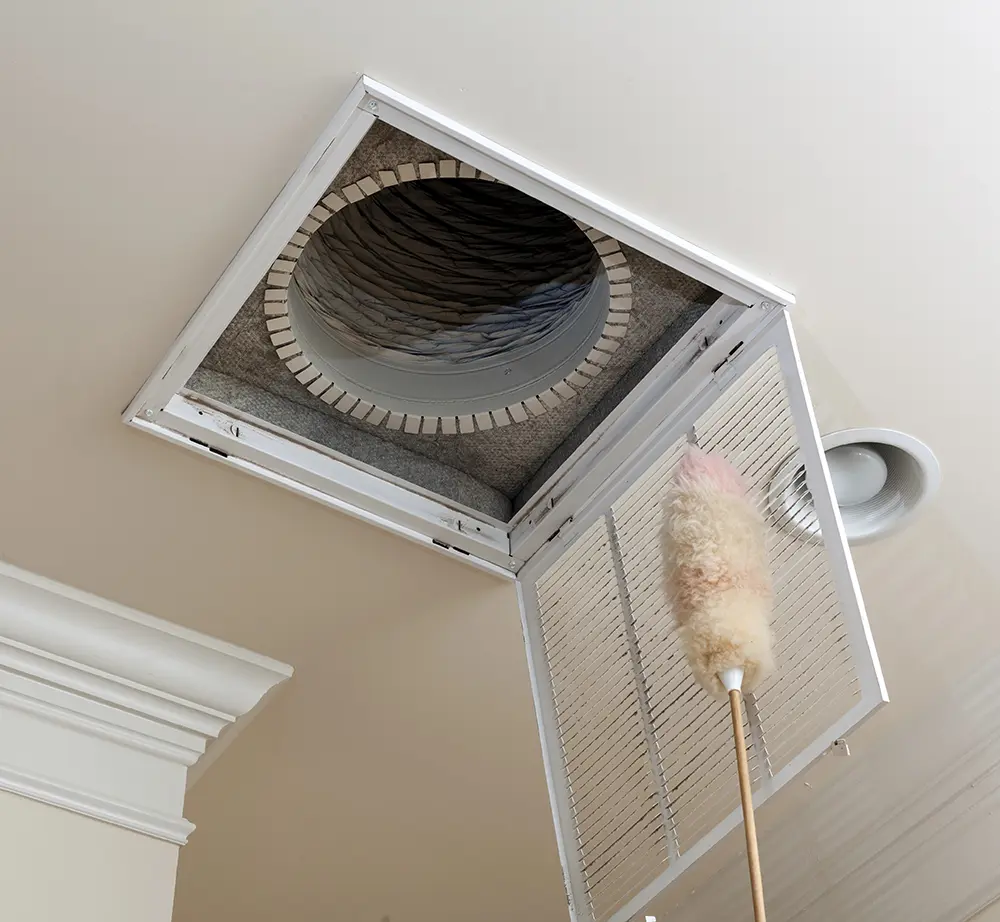
HVAC systems are supposed to capture dust, not circulate it, but several things can reverse that job. Leaks in return ducts can pull dusty air from attics, basements, or wall cavities, and a clogged filter reduces airflow so dust moves around the filter instead of through it. Weak or low-efficiency filters let fine particles blow straight back into the home, and dust that’s built up on a dirty blower motor or evaporator coil gets redistributed every time the system runs, which undermines HVAC dust control at the source. If you see dust collecting around vents, it usually means the system is moving particles instead of stopping them.
Your return system matters more than your supply system. Most homes have many supply vents but only a few returns, which forces the HVAC to pull air aggressively from wherever it can, behind walls, around plumbing penetrations, through unsealed attic knee walls, laundry or utility areas, or even gaps around the furnace cabinet. When those paths are dirty, the dust ends up indoors and eventually in your lungs, which is why some dusty house solutions focus entirely on correcting these airflow pathways instead of mechanical upgrades.
How Better Filters Help Reduce Dust in Home
Filters work like bouncers at the door, they prevent unwanted particles from getting past. Cheap or dirty filters basically let everyone in. Low-quality fiberglass filters only catch large debris, not dust or dander, and dirty filters reduce airflow so the HVAC ends up pulling air from gaps and leaks, which brings in even more dust and makes it harder to reduce dust in home areas. Bent or poorly fitted filters make things worse by letting air bypass the filter entirely. If your filter isn’t at least a MERV 8-13, it’s not doing meaningful dust control or supporting proper HVAC dust control.
Beyond trapping less dust, low-quality or clogged filters create air bypass, which most homeowners never hear about. When a filter becomes clogged, airflow takes the path of least resistance, and that path is often around the filter instead of through it. The result is the dustiest air getting a direct pass into your ducts. A dirty filter is bad, but a dirty filter that allows bypass is worse, because it makes you think the system is filtering when it’s actually free-passing dust, limiting any dust removal HVAC benefit the system should provide.
Easy Fixes for Better HVAC Dust Control
A few maintenance tasks actually make a measurable difference. Replacing filters every 1-3 months is the easiest, highest-impact habit, and vacuuming your return vents and supply registers keeps lint and pet hair from re-entering the air. Sealing visible duct leaks with mastic or real HVAC foil tape prevents the system from pulling in dirty air, and keeping dust cleared from the blower compartment (usually done during a tune-up) helps the system move air cleanly and helps reduce dust in home circulation. It also helps to keep the area around your indoor unit clean so loose dust isn’t constantly being pulled into the return.
Vacuuming behind the return grille matters too, most returns have a mini lint-trap zone that never gets cleaned and builds up thick dust. Inspecting the filter slot for even tiny gaps helps prevent bypass air, and opening all vents fully keeps static pressure lower so leaks aren’t encouraged. Setting the fan to “ON” for an hour or two a day provides gentle, consistent filtration, and keeping a clutter-free zone around the indoor unit reduces the amount of dust the system can pull in. All of these simple steps support smoother airflow and basic dusty house solutions that don’t require upgrades.
Designer Airflow Tips to Improve Indoor Air Quality
Designers can dramatically improve indoor air quality by treating airflow as part of the home’s architecture. Strategic placement of supply and return vents creates well-balanced circulation that prevents stagnant, dusty pockets, and zoning allows room-by-room control so pressure imbalances don’t pull in dust. Natural ventilation through cross-breezes, well-placed windows, or operable skylights lets dust escape rather than accumulate which improve indoor air quality too. Material choices also matter, low-shedding textiles, sealed floors, and smooth surfaces reduce dust at the source, and modern builds can integrate whole-home filtration directly into the layout. Good design doesn’t just move air; it guides where dust can and cannot settle.
Creating “clean” and “dirty” zones supports the same idea, with returns placed in common areas rather than bathrooms, laundry rooms, or pet zones. Displacement ventilation, supplying air low and pulling it high, helps sweep dust upward and out, and thermal strategies that take advantage of rising warm air do the same through high returns or clerestory vents. Designing pressure-neutral rooms by giving each major space its own return reduces infiltration, improve indoor air quality, and choosing materials with minimal particulate shedding prevents dust from being generated in the first place.
Upgrades That Boost Dust Removal HVAC
These upgrades actually make a noticeable difference. HEPA filtration or HEPA-bypass systems capture ultra-fine dust, allergens, and smoke, and bypass setups avoid the airflow restrictions that standard ducts can’t handle. Whole-home air purifiers, either electric or media-based, attach to the HVAC system and trap smaller particles than standard filters, while electronic air cleaners use a static charge to attract and capture fine dust without restricting airflow. UV-C lights don’t trap dust, but they stop biological buildup like mold and bacteria that mix with dust and worsen air quality. Humidity control, whether through a whole-home humidifier or dehumidifier, keeps dust from becoming airborne and supports dust removal HVAC performance by reducing static, shedding, and dust mites.
HEPA bypass filters offer hospital-level cleaning without hurting HVAC airflow, and polarized media air cleaners provide magnetic attraction ideal for fine particulates. Whole-home dehumidifiers support the same goal of reducing airborne particles, and UV-C continues to help by targeting the biological “payloads” stuck to dust. Duct fogging sealants can also coat the inside of ducts to seal the micro-leaks dust enters through. These add-ons turn your HVAC into an air-cleaning system, but choosing the right one depends on whether your dust is fibrous, outdoor-based, pet-related, or fine particulate, which determines the most effective dust removal HVAC configuration.
How To Stop Dust In Your House
Long-term dust control is about reducing dust production, not just increasing dust removal. Sealing air leaks, around attic doors, window trim, baseboards, outlet plates, and exterior door frames, cuts down the amount of dusty air entering the home. Stabilizing your building pressure supports the same goal, since a home under constant negative pressure will always draw dust inward. Air sealing the big hidden leaks behind attic kneewalls, unsealed top plates, and chimney chases keeps those pressure paths from becoming dust highways and helps reduce dust in home airflow cycles.
Upgrading to a high-MERV filter (MERV 11-13 is ideal for most homes) and using continuous low-flow filtration, either through a low-watt ECM fan or a standalone MERV-13 purifier, keeps particles from accumulating between HVAC cycles. Replacing old carpets, heavy fabrics, and deteriorating materials like crumbling duct insulation or fiber-based attic insulation eliminates major dust sources inside the home. Improving ventilation, whether through mechanical systems or smarter airflow design, helps move stale air out, and keeping vent covers clean with consistent filter changes adds to the overall effect. Balanced humidity reduces static and surface cling, making dust less likely to float or stick. Stopping dust means controlling the inputs, not just cleaning the outputs, which is the foundation of many dusty house solutions.
When Dust Signals You Need Pro-Level Dusty House Solutions
Call a pro if dust returns within a day or two after cleaning, if you see buildup on or around HVAC vents, or if certain rooms feel dusty even when the rest of the home seems fine. Inconsistent airflow, hot or cold spots, higher-than-usual allergy symptoms, or a sudden spike in energy bills can all point to duct or pressure problems. A technician can check for the issues you can’t see, return duct leaks, negative pressure, or dust collecting inside the HVAC cabinet, especially when the causes of excessive dust in home systems aren’t obvious.
Sometimes the symptoms tell an even deeper story. “Dust shadows” around baseboards or door frames suggest air infiltration, while rings of dust around furniture legs point to pressure imbalance. Darker, greyer dust often means attic insulation is entering the air stream. Return vents that whistle or feel unusually strong can indicate return imbalance, and dust bursts when the HVAC kicks on are classic signs of duct leakage. If you dust and it comes back the same day, return duct leaks should be high on the list, especially if nothing seems to reduce dust in home areas consistently.