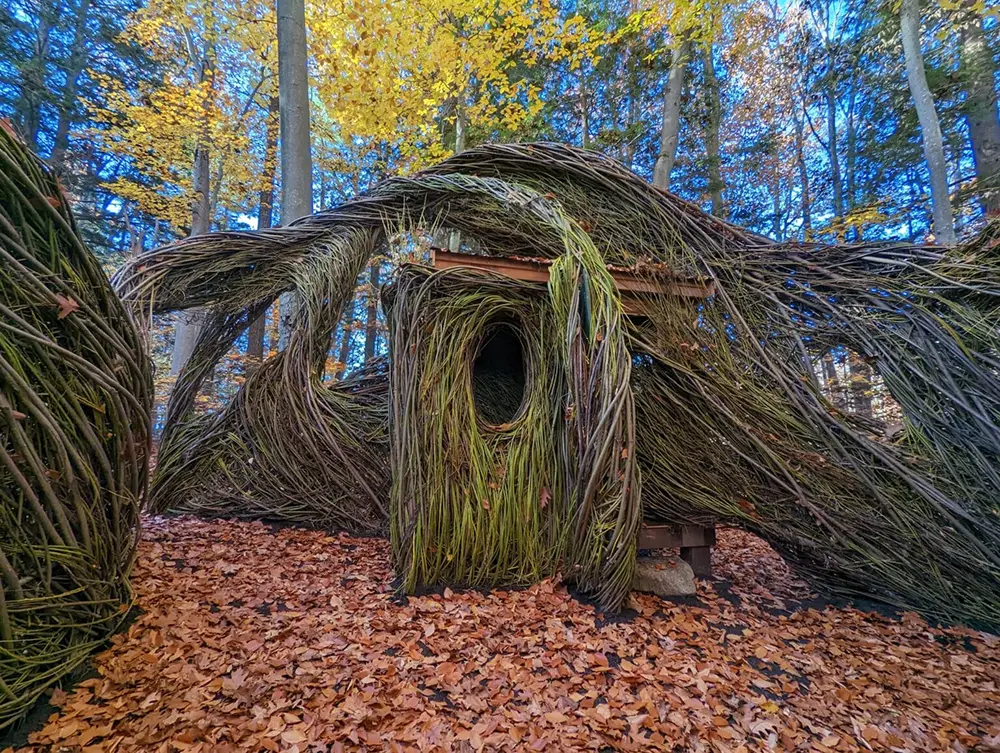
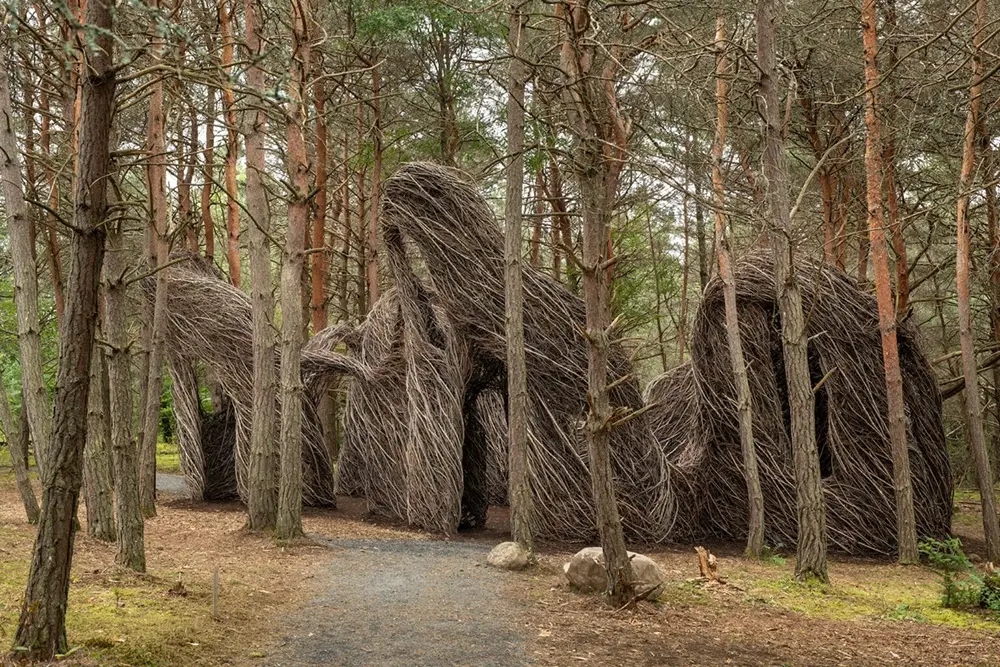
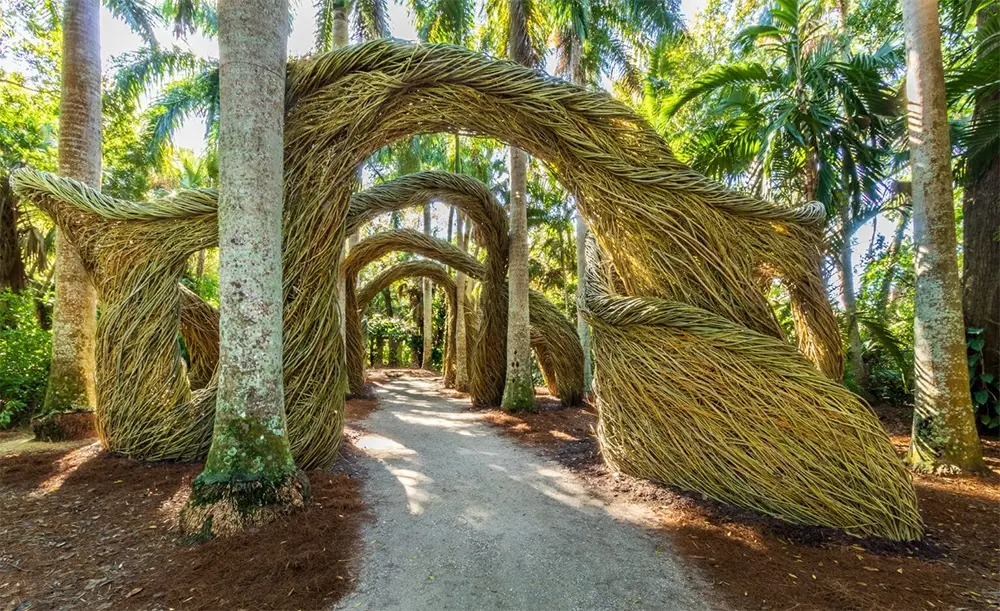
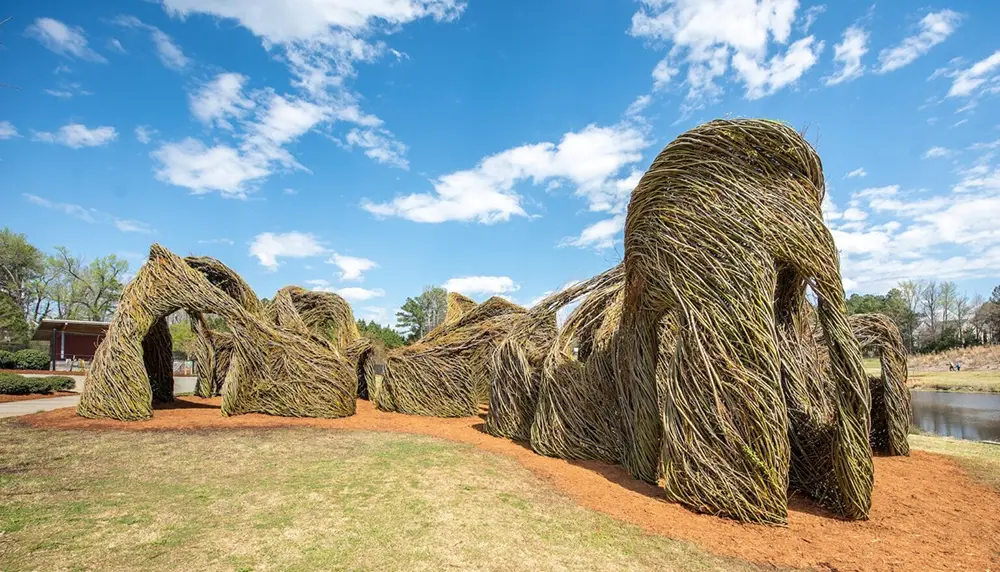
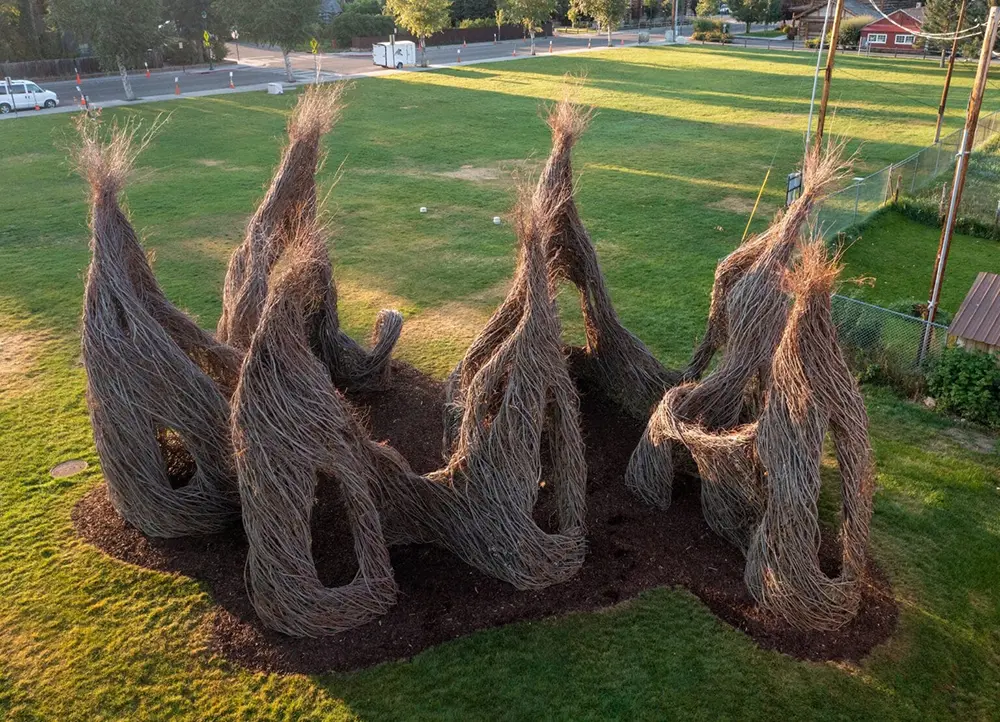
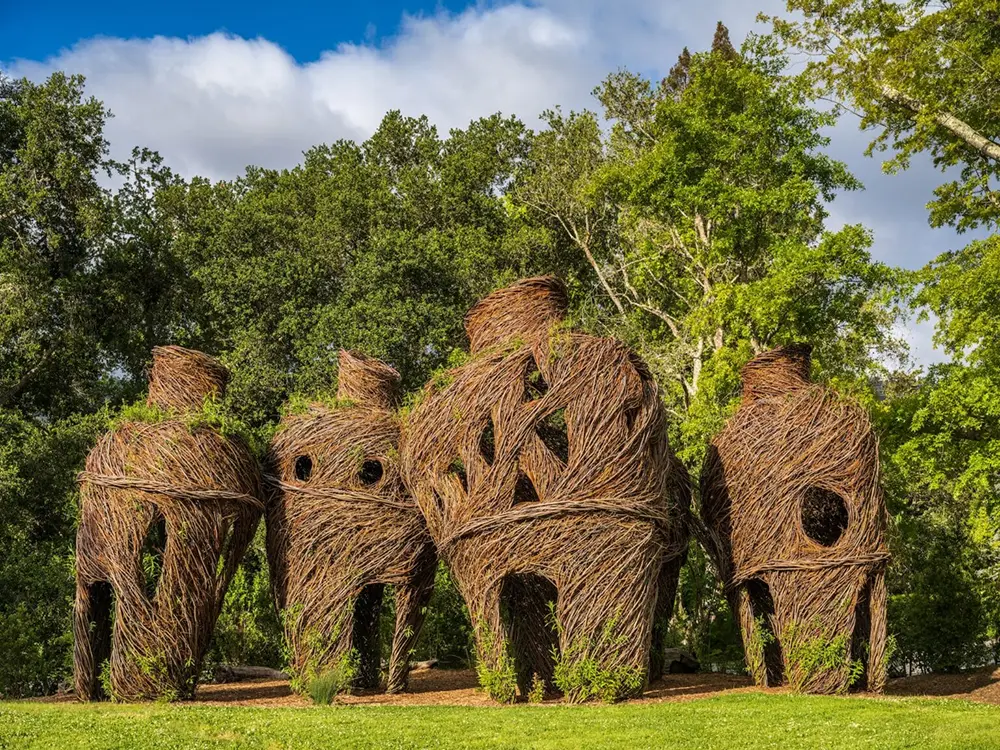
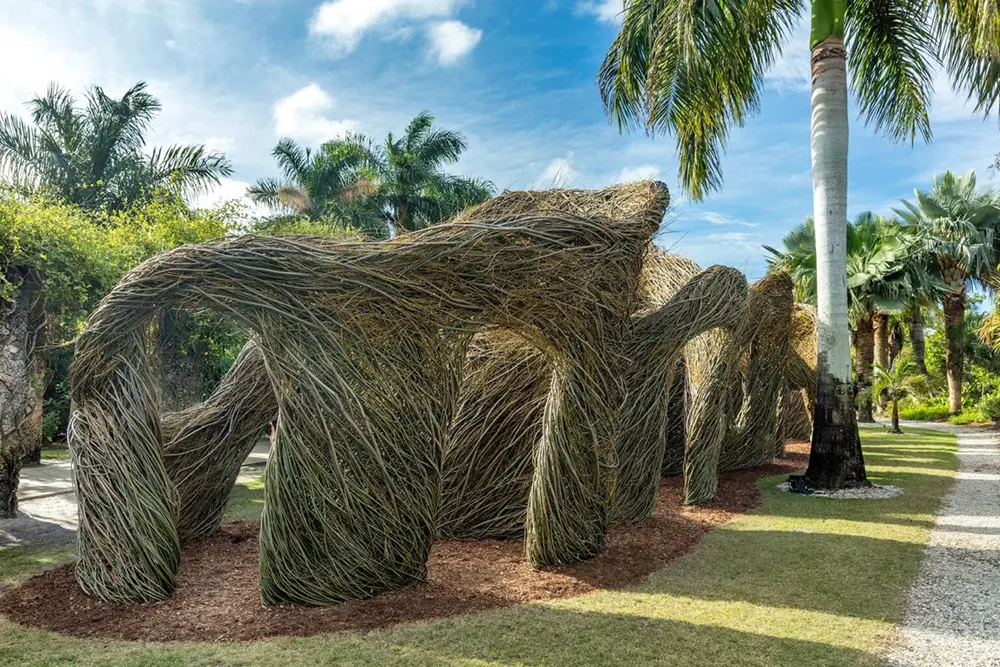
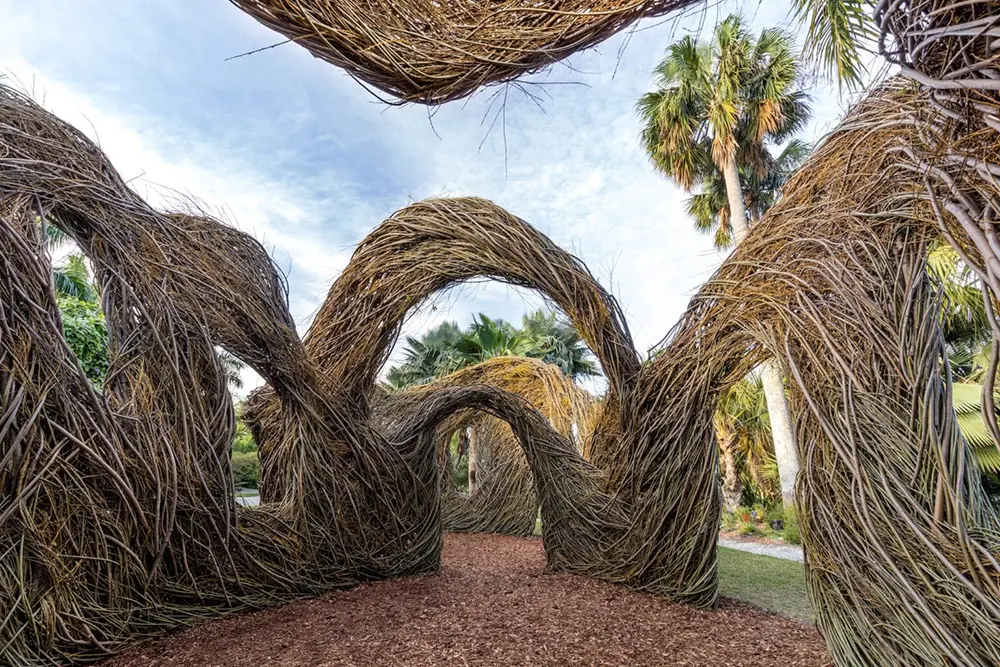
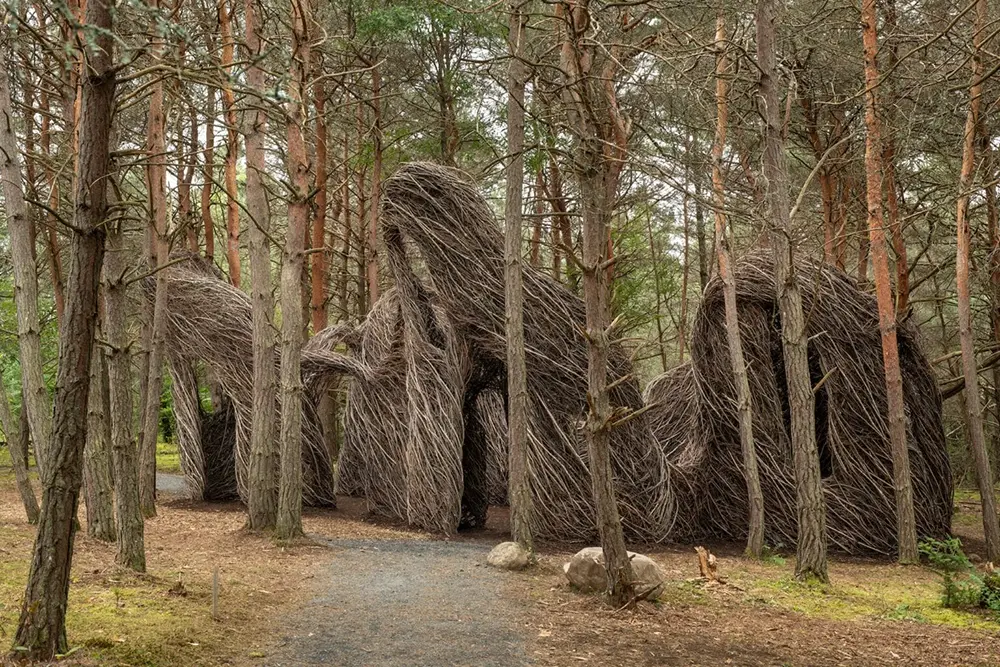
It’s amazing what can be created with a pile of sticks. Patrick Dougherty stick sculptures prove that even the simplest natural materials can become breathtaking works of art.
For more than 40 years, North Carolina-based environmental artist Patrick Dougherty has transformed ordinary willow twigs into extraordinary, larger-than-life installations. His ongoing series, Stickworks, includes more than 300 site-specific creations built around the world. Each sculpture is carefully woven by hand using thousands of flexible willow saplings—sometimes entire truckloads of them—sourced from Canadian farms where they’re grown for traditional crafts like basket weaving and fencing. Whenever possible, Dougherty also incorporates branches and other materials found near each installation, helping every piece blend naturally into its surroundings.
What makes Patrick Dougherty stick sculptures so captivating is that they feel like something straight out of a fairy tale. Twisting towers, winding tunnels, and organic forms invite visitors to wander through them, blurring the line between sculpture, architecture, and nature. They don’t just sit in the landscape—they become part of it.
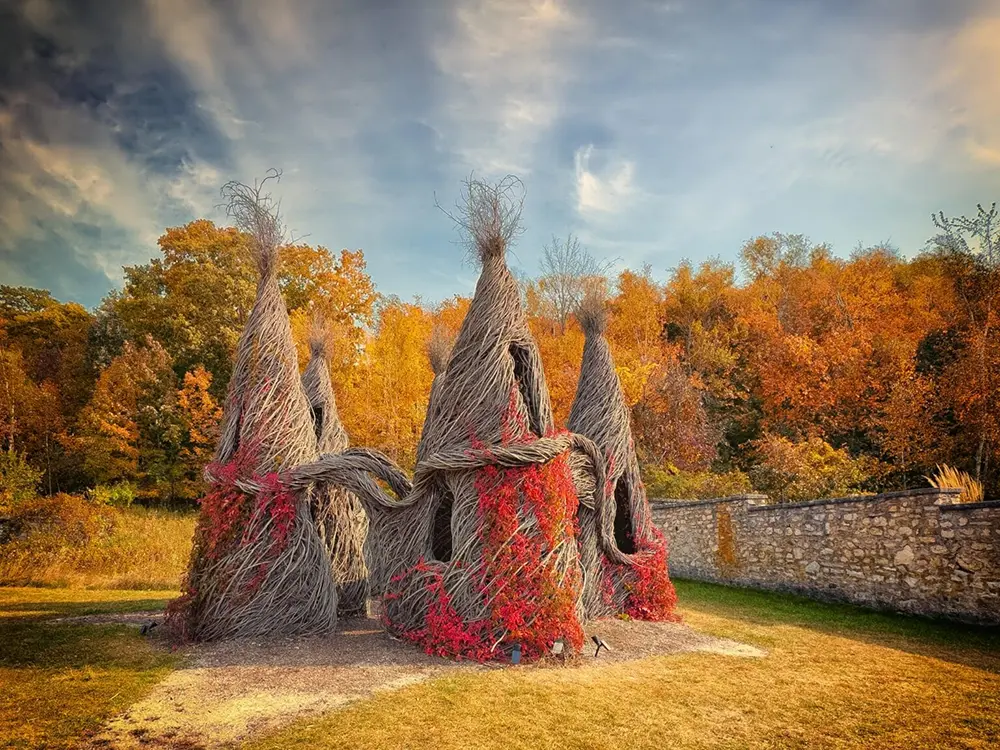
One of my favorites is “Happy Go Lucky,” located at Horseshoe Bay Farms in Door County, Wisconsin. Right now, the sculpture had already been embraced by climbing Virginia creeper vines, which transform into brilliant shades of red every autumn. The woven structure had become a living framework for plants, insects, and wildlife, making it feel as though nature was continuing the artwork long after the artist had finished.
That’s the magic of Dougherty’s work. His sculptures aren’t meant to stay frozen in time. As the seasons change and plants grow around them, they continue to evolve, making every visit a little different from the last.