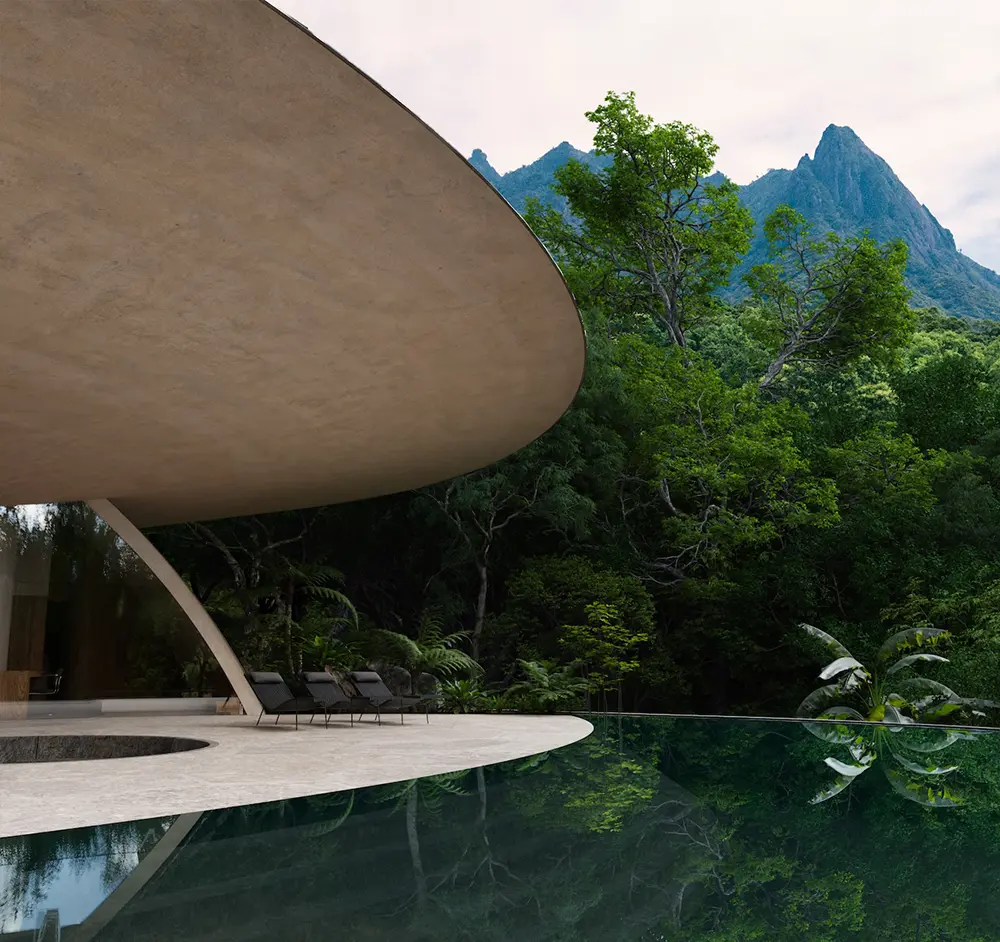
In Yakushima, rain isn’t just something that happens now and then. It is part of everyday life—and Sound of Rain takes that idea and turns it into architecture.
The concept imagines the first rainfall on the island, when sky met earth and rain became part of Yakushima’s cultural memory. Instead of trying to keep rain outside, the rain architecture brings it into the experience of the building. Rain becomes a collaborator, shaping the structure, rituals, sounds, and atmosphere.
The result is less an object sitting in the landscape and more a place designed around the simple act of living with rain.
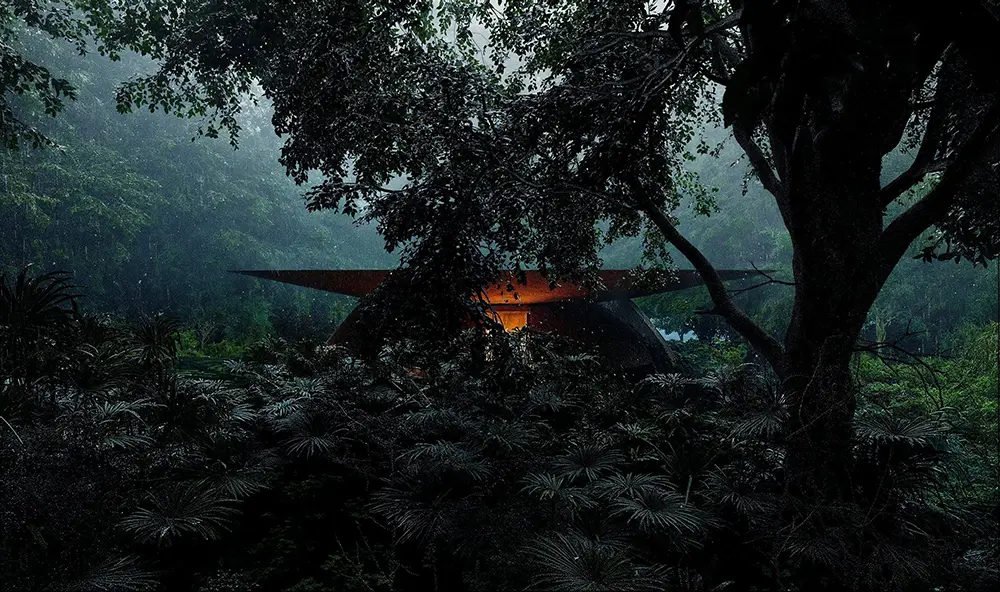
A Place to Slow Down
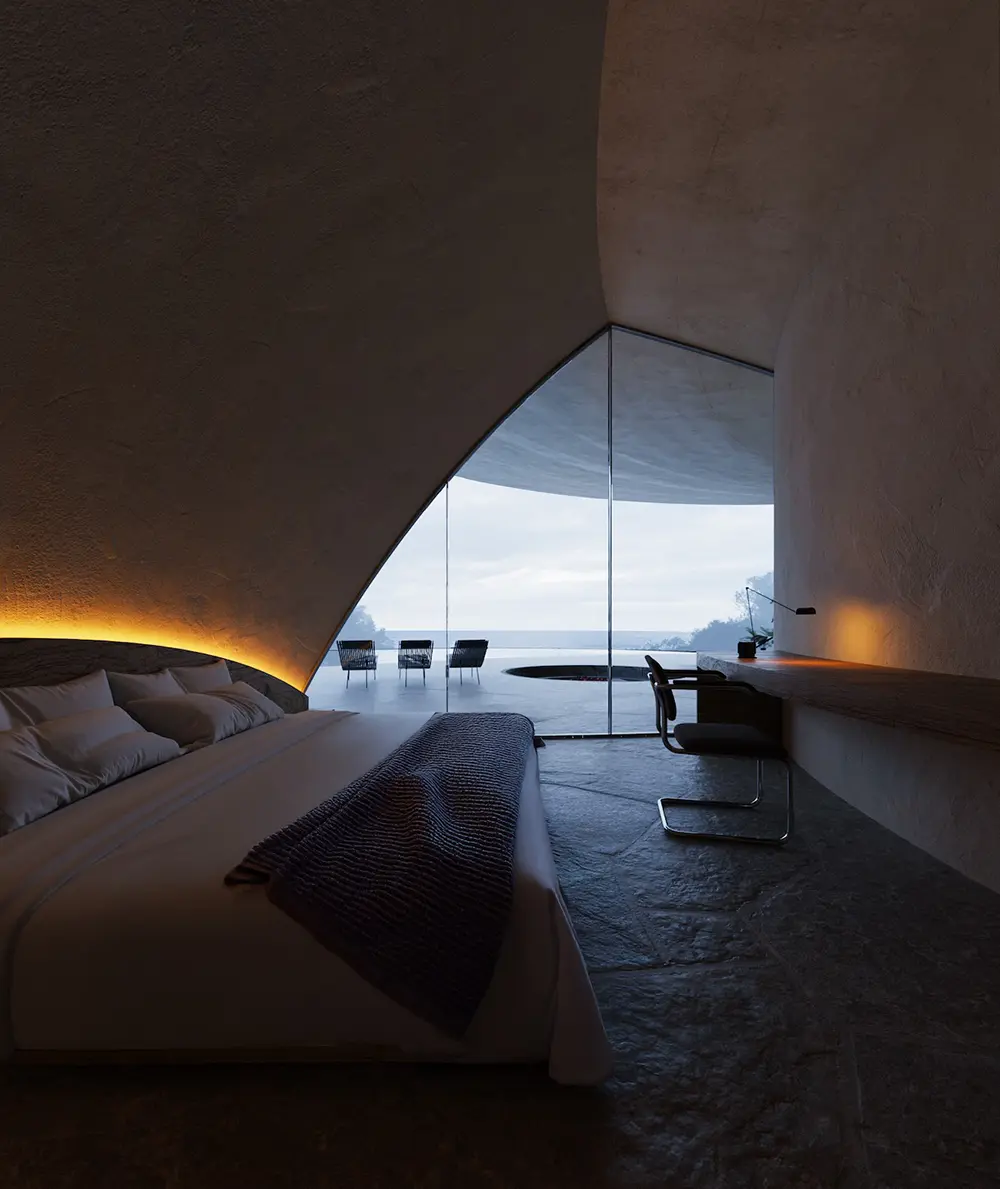
Inside, the layout is intentionally simple. The sleeping areas are tucked away on one side, with darker, quieter spaces designed for rest and retreat. On the other side, cooking, conversation, bathing, and gathering spaces surround a central atrium.
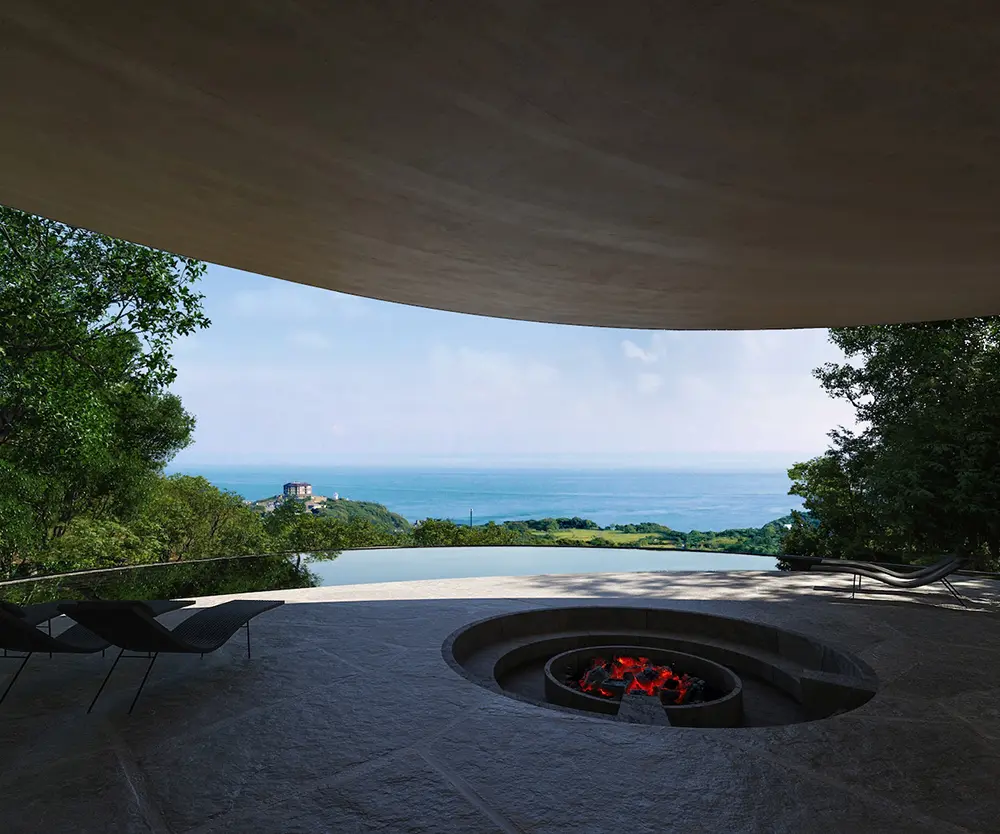
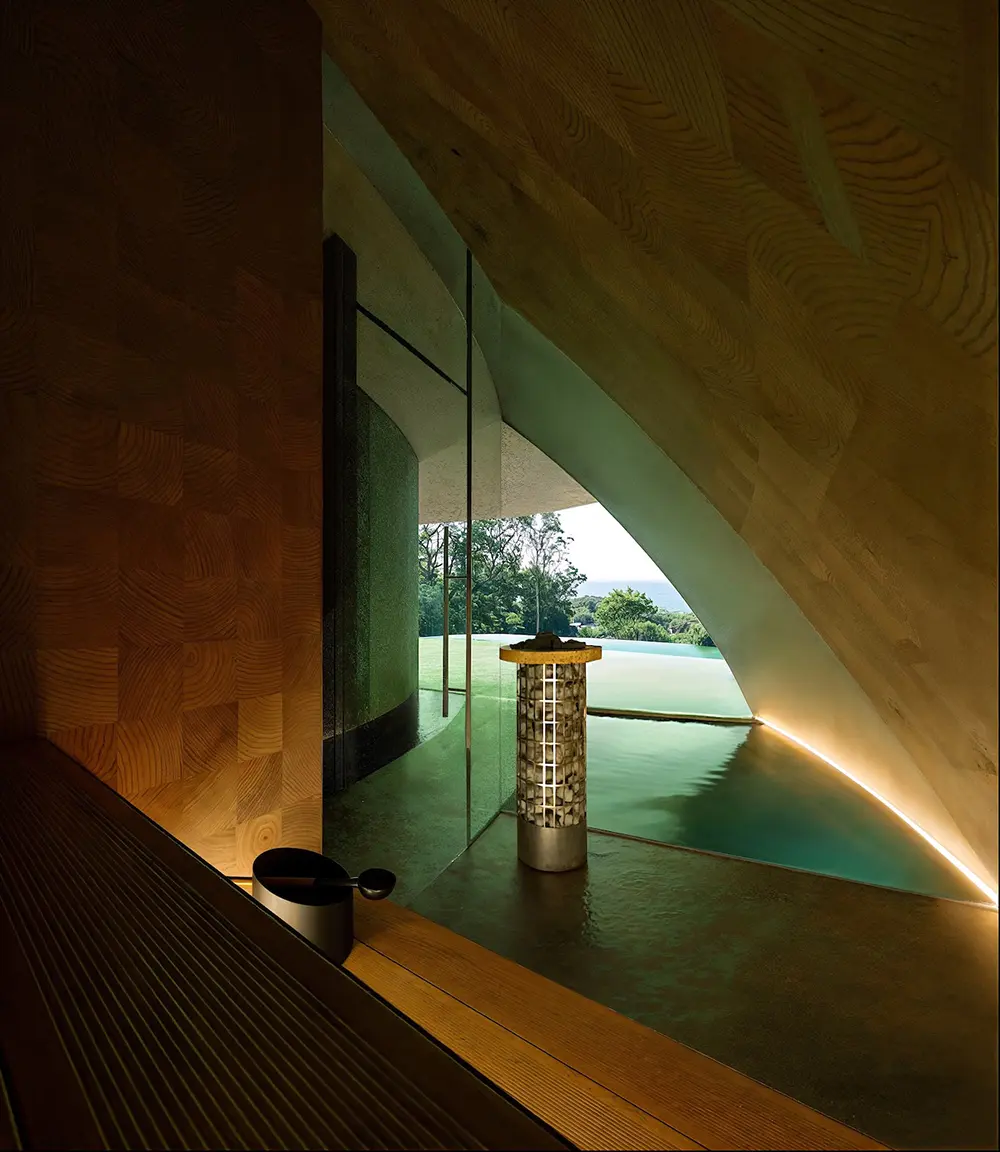
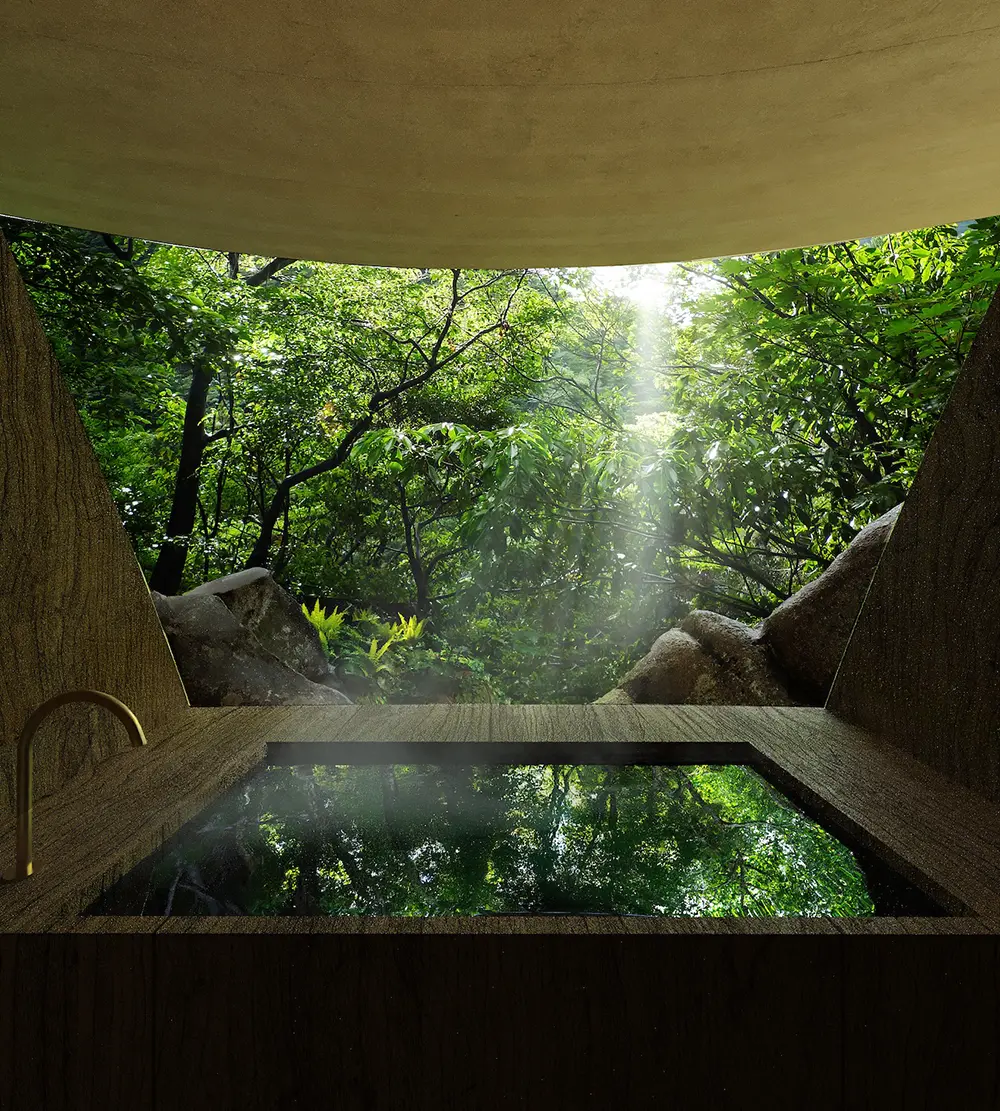
The journey through the building happens gradually. An antechamber leads to a sunken conversation lounge, an outdoor irori, and finally a bathing pool. Earth, air, fire, and water aren’t simply represented—they become part of everyday rituals.
And then there is the sound of rain. It lands on stone, moves across water, and becomes softer as it reaches clay and cedar surfaces. Instead of checking the clock, visitors can simply listen to the changing weather and let time slow down.
When Rain Becomes Part of the Building
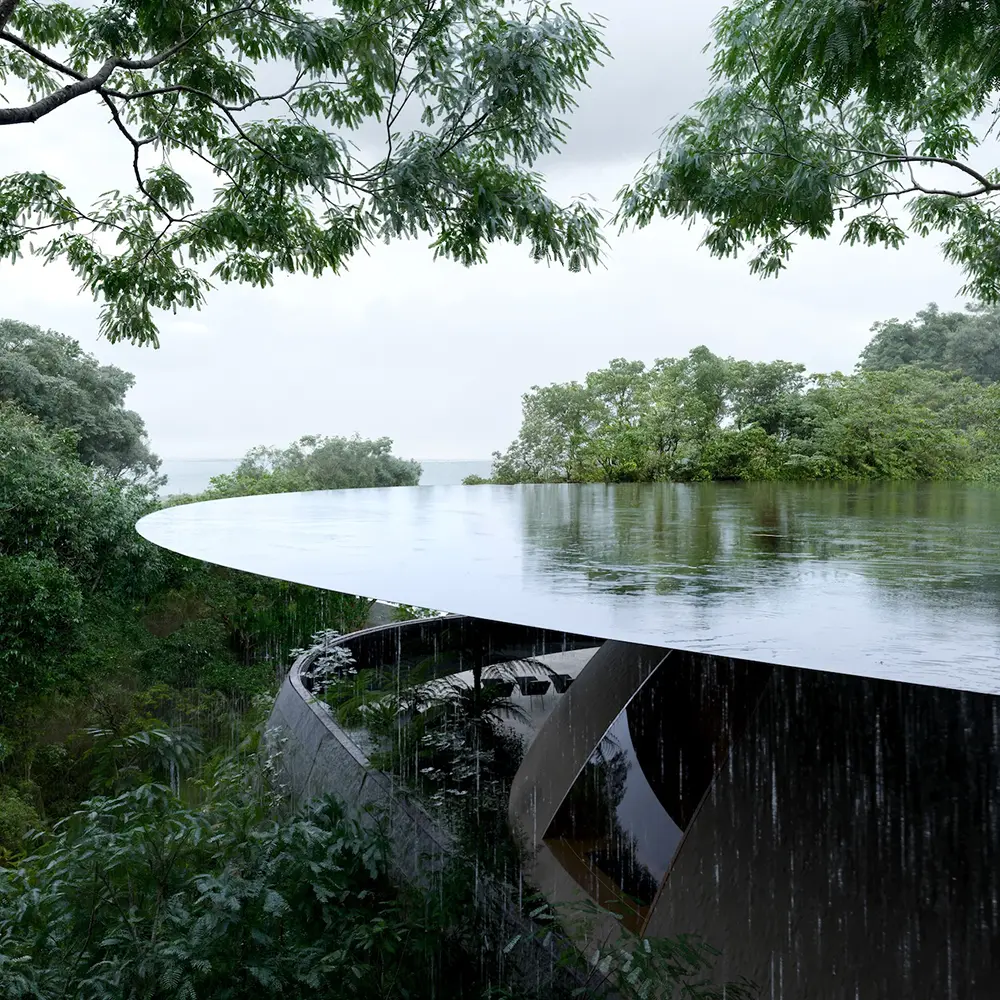
The architecture is framed by two spherical forms, suggesting Sky and Earth. Its roof is designed around Yakushima’s heavy rainfall, using gravity to collect, guide, and reuse water.
Rainwater flows across the roof and around the central oculus, filtering daylight and creating a soft, constantly changing glow inside. At the entrance, collected rain becomes a gentle waterfall before continuing through a filtration system and eventually being reused for bathing.
The materials are just as closely connected to the island. Granite anchors the building, while clay plaster made with local sand, mountain soil, native fibers, and Yakushima rainwater gives the walls a warm, tactile character. Cedar is used where people touch the building most, allowing its grain and natural aroma to change over time.
Together, rain, stone, clay, cedar, light, and air create an architecture that doesn’t try to control nature. Instead, Sound of Rain makes nature part of the experience—and in Yakushima, that means letting the rain tell the story.