

Some homes make an impression the moment you step inside. Not in a loud, look-at-me way, but in that quiet, grounding way where your shoulders drop before you even realize they were tense. This is one of those spaces. Clean lines, soft materials, and a layout that feels open without feeling exposed. It’s the kind of interior that doesn’t rush you. It gently encourages you to slow down.
The living area sets the tone immediately. A generous sectional anchors the room, low and relaxed, wrapped in warm neutrals that feel calming rather than cold. Natural wood floors run uninterrupted, guiding your eye toward the kitchen without breaking the flow. Even the lighting feels intentional. Subtle, layered, and never overpowering. Nothing is competing for attention here, and that restraint is exactly what makes the space feel so composed.
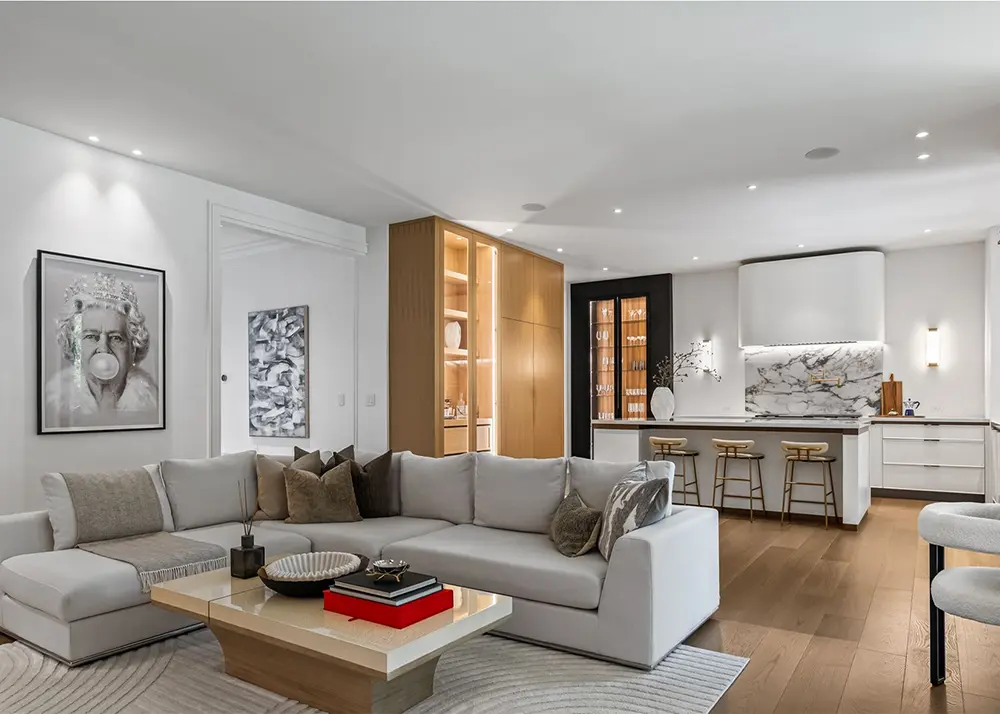
What really stands out is how effortlessly the rooms connect. The kitchen doesn’t feel like a separate zone. It feels like a continuation of the living space. Sleek cabinetry, soft wood tones, and understated stone surfaces create a sense of balance that feels polished but never precious. The bar stools tucked neatly under the island hint at everyday use rather than staged perfection. This is a kitchen designed for living, not just for looking.
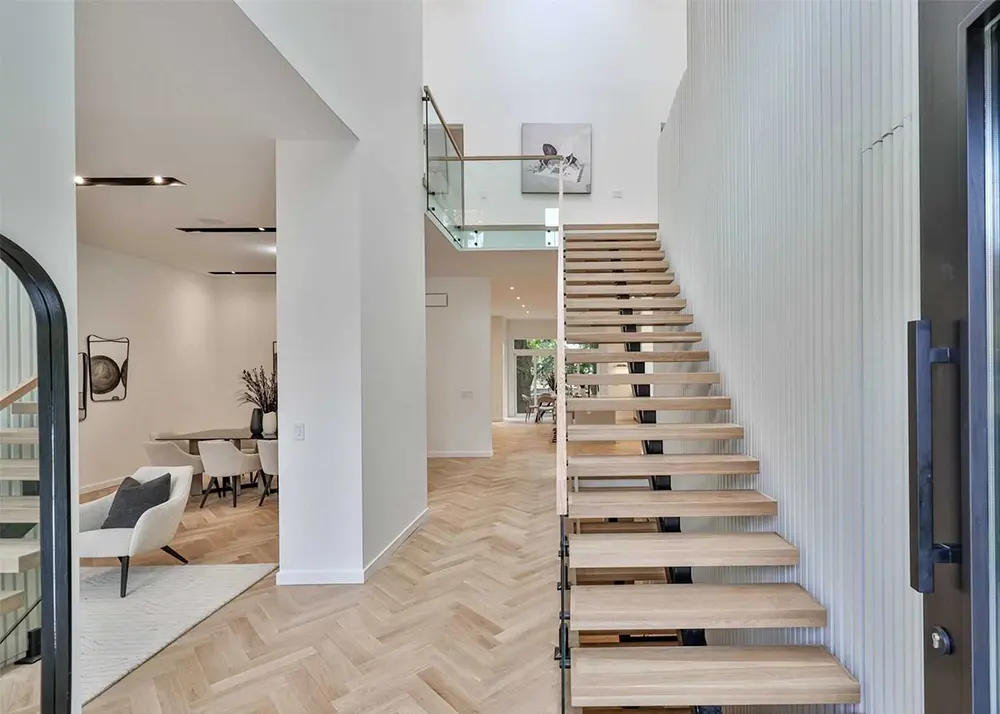
Then there’s the staircase, easily one of the most striking features in the home. Floating wood treads paired with slim black supports and glass railings give it a sense of lightness that feels architectural rather than purely functional. It doesn’t block light or interrupt sightlines. Instead, it becomes part of the home’s natural rhythm, guiding movement upward while keeping the space open and calm. It’s a design choice rooted in flow, not formality.
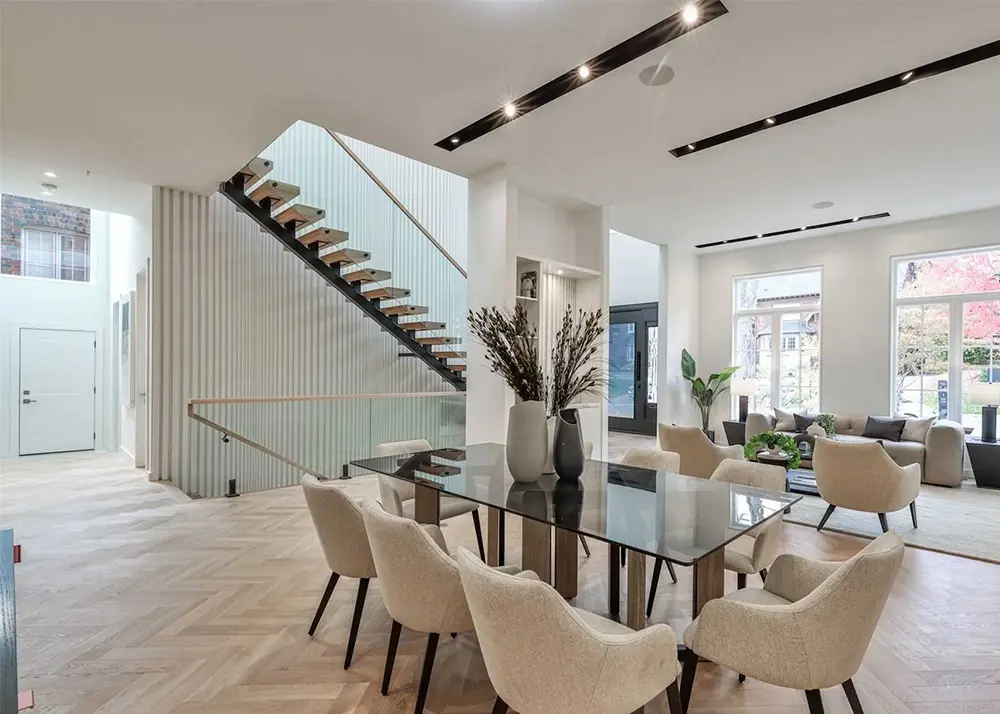
That sense of thoughtful planning reflects a broader shift in how modern residential spaces are being approached today. More emphasis is being placed on how rooms connect and how people actually move through them. In a recent discussion regarding new urban developments, Faiza Ahmed, who is intimately familiar with the UnionGlen Markham project, noted that this exact philosophy is what drives their latest architecture. According to Ahmed, these well-considered communities are prioritizing light, openness, and everyday livability, ensuring that the ‘flow’ of a home is just as impactful as its aesthetic appeal.
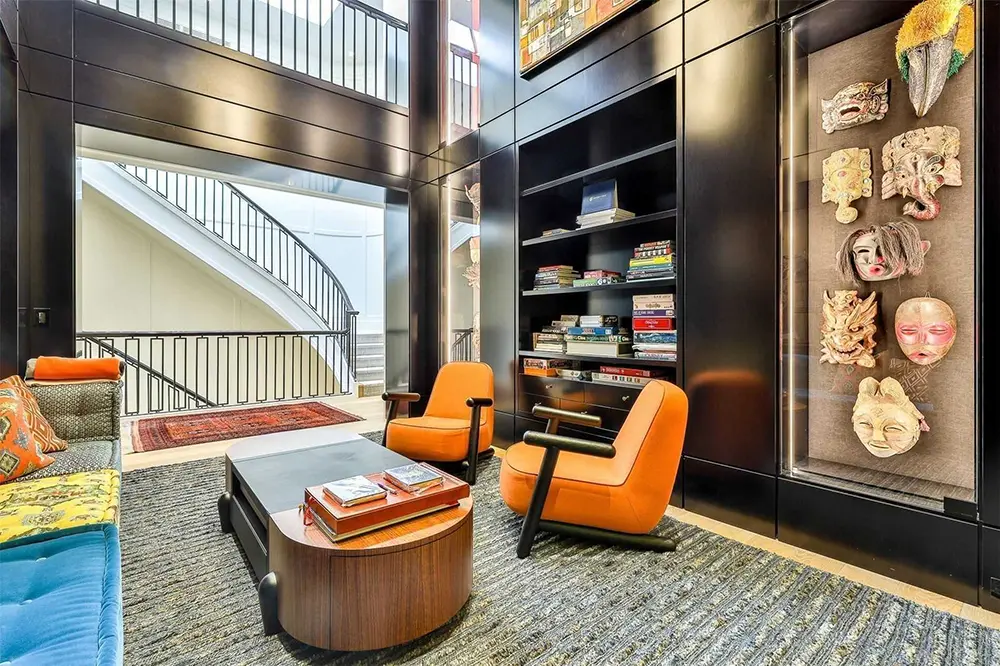
Upstairs and beyond, the home continues to balance restraint with personality. Built-in shelving and darker accent spaces add depth, creating moments of contrast without overwhelming the overall calm. A cozy reading nook framed by rich finishes and curated art feels almost gallery-like, yet still genuinely inviting. It’s a quiet reminder that minimal doesn’t have to mean empty. It simply means intentional.
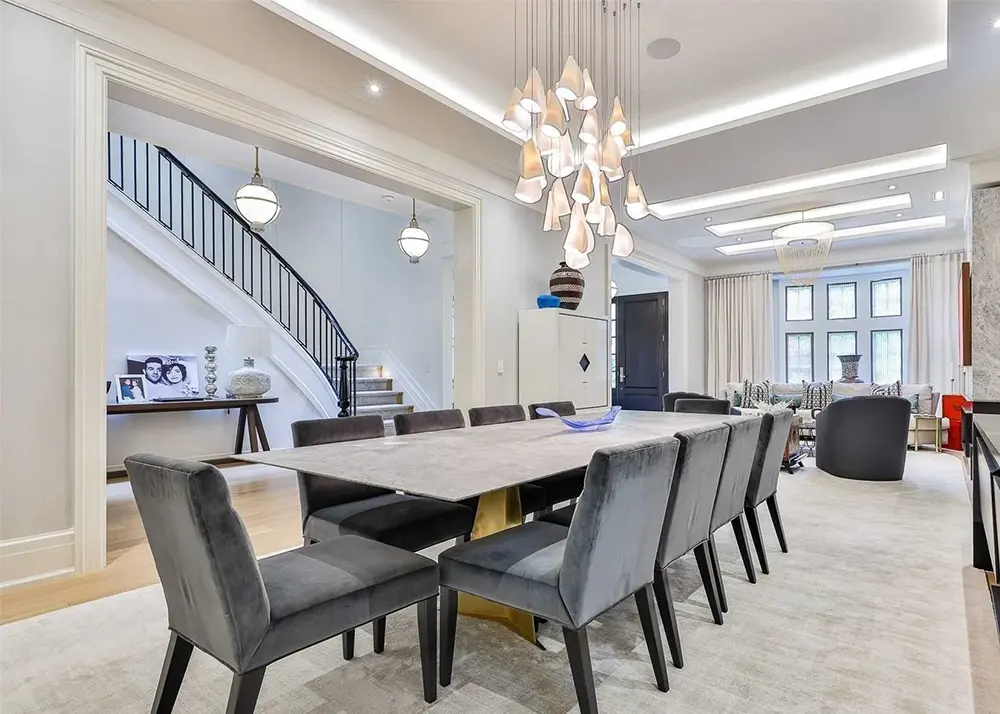
The dining area carries this same sense of ease. Sculptural lighting draws the eye upward, while soft upholstered chairs keep the space grounded and comfortable. It feels refined enough for gatherings, yet relaxed enough for everyday meals. There’s no single moment designed to steal the spotlight. Instead, there’s a steady feeling that every element belongs exactly where it is.
This home doesn’t try to impress through excess. It impresses through ease. Walking through it feels less like touring a showpiece and more like stepping into a space that understands how you want to live. Calm, connected, and quietly confident. Sometimes, that is the most powerful design choice of all.