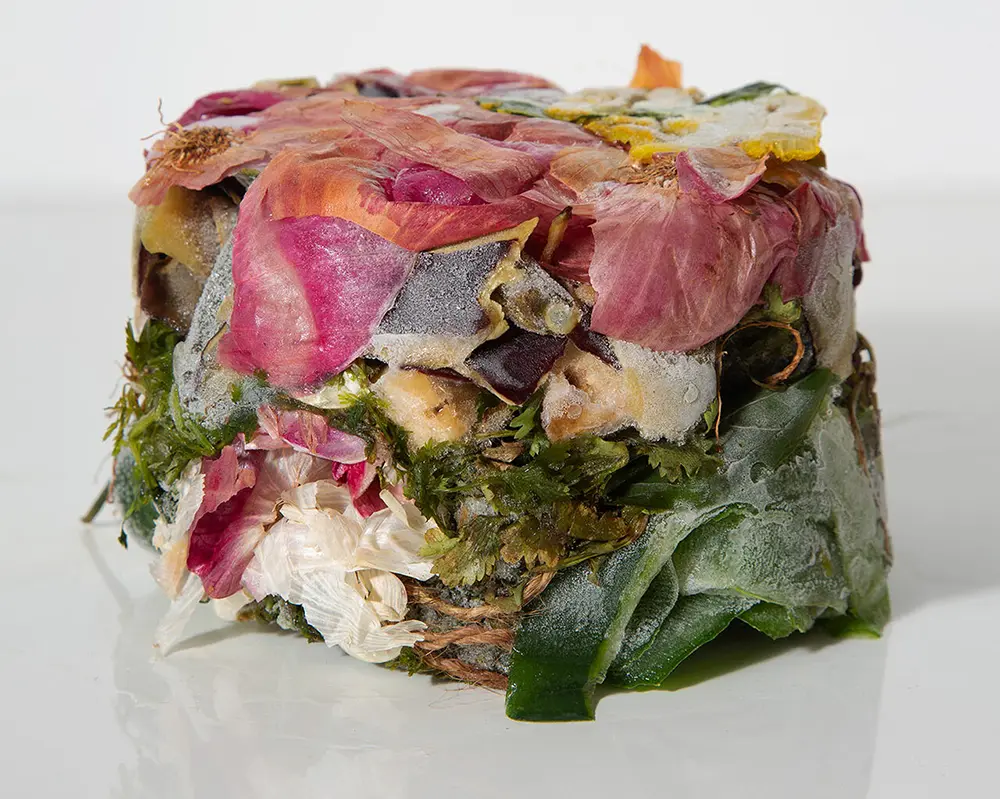
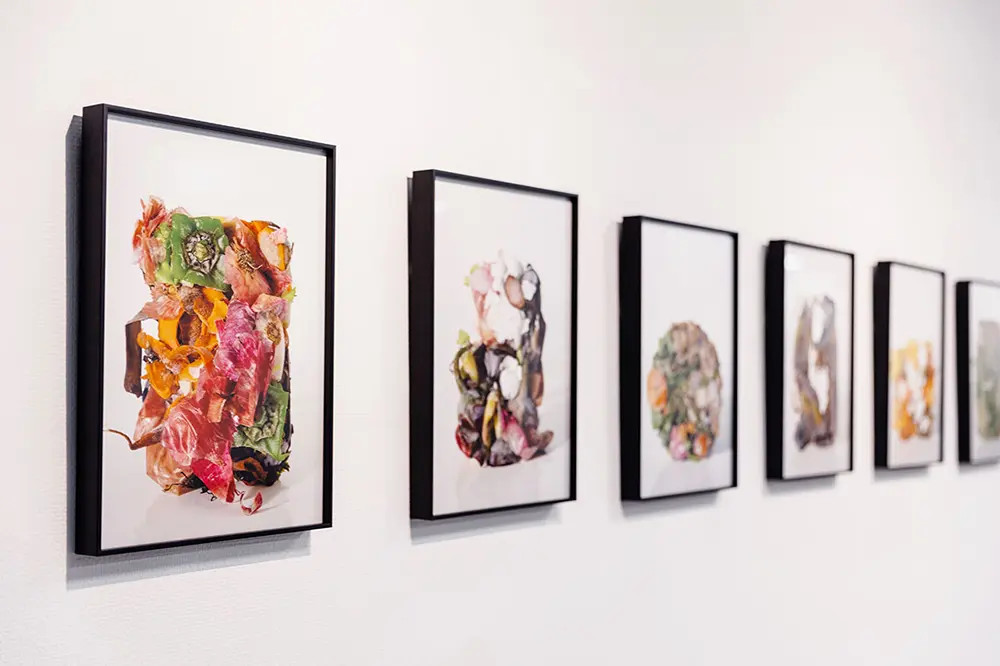
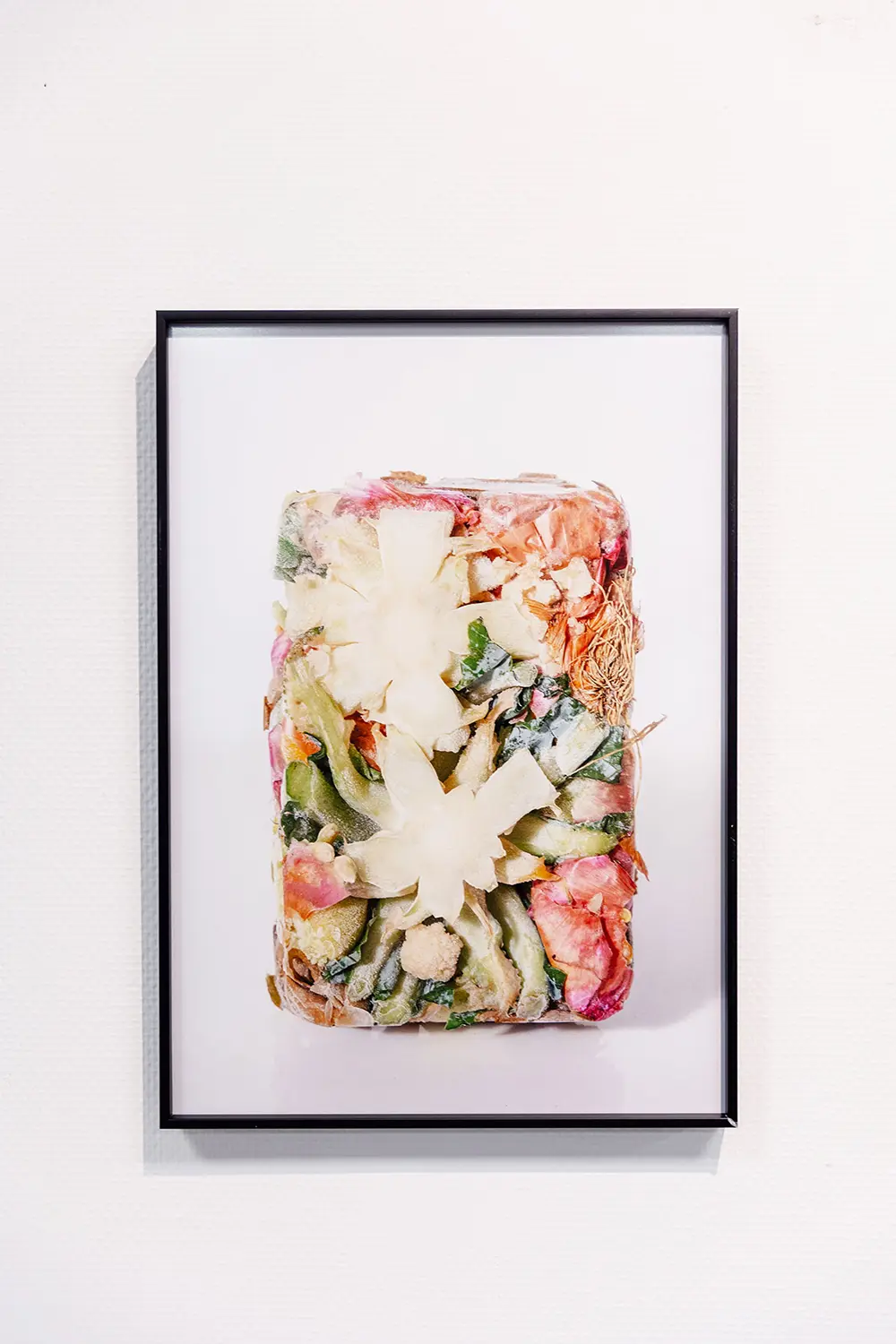
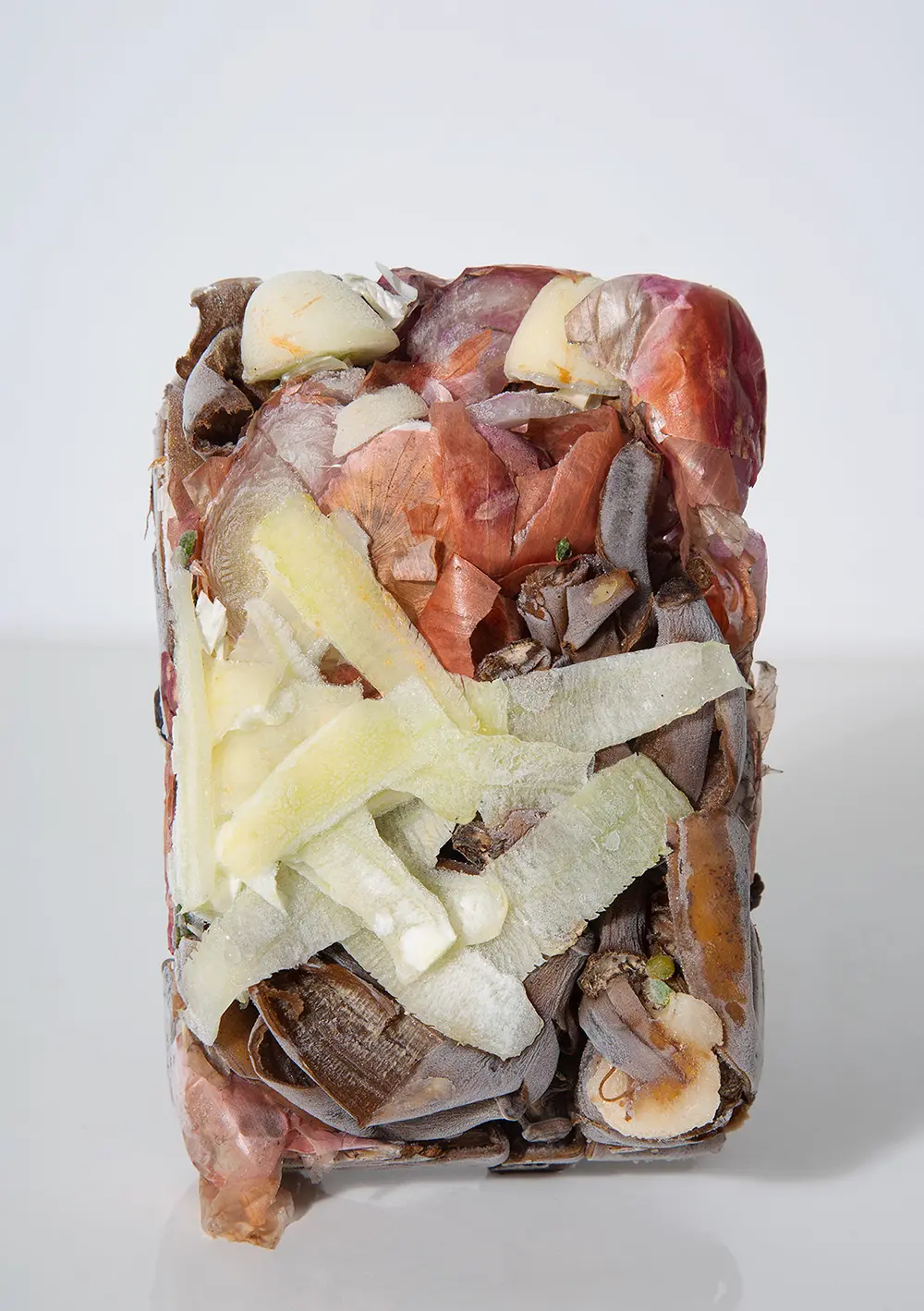
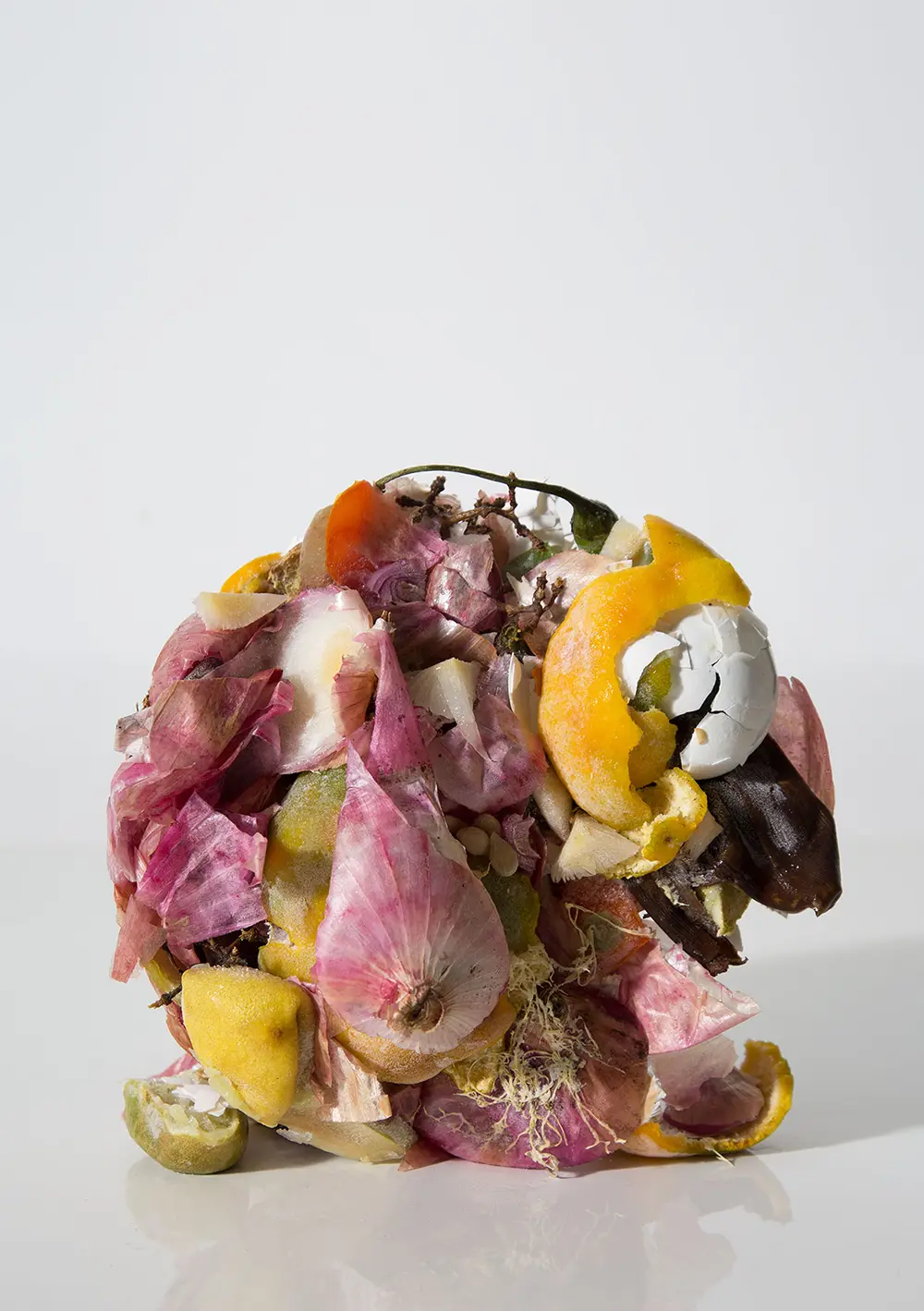
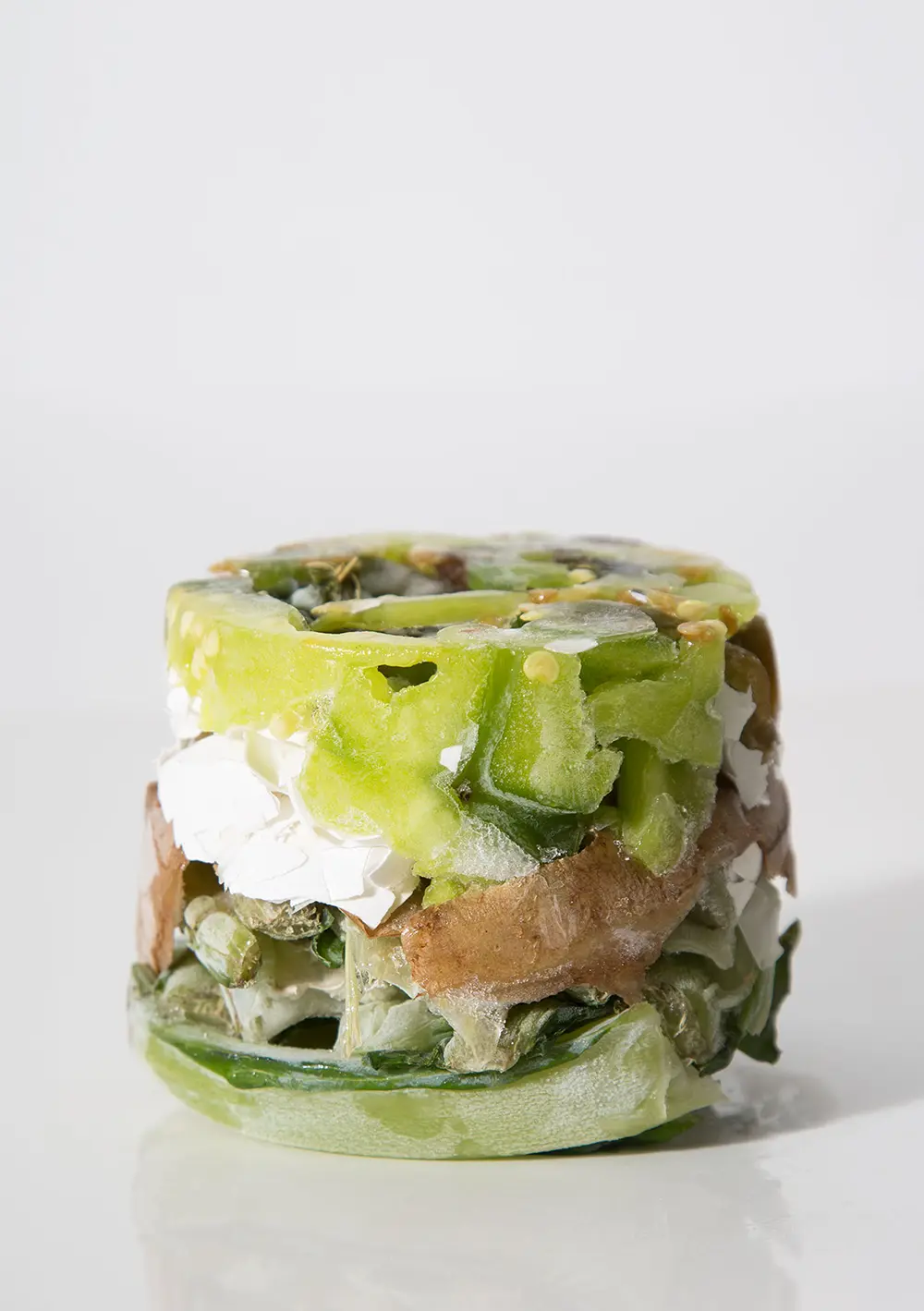
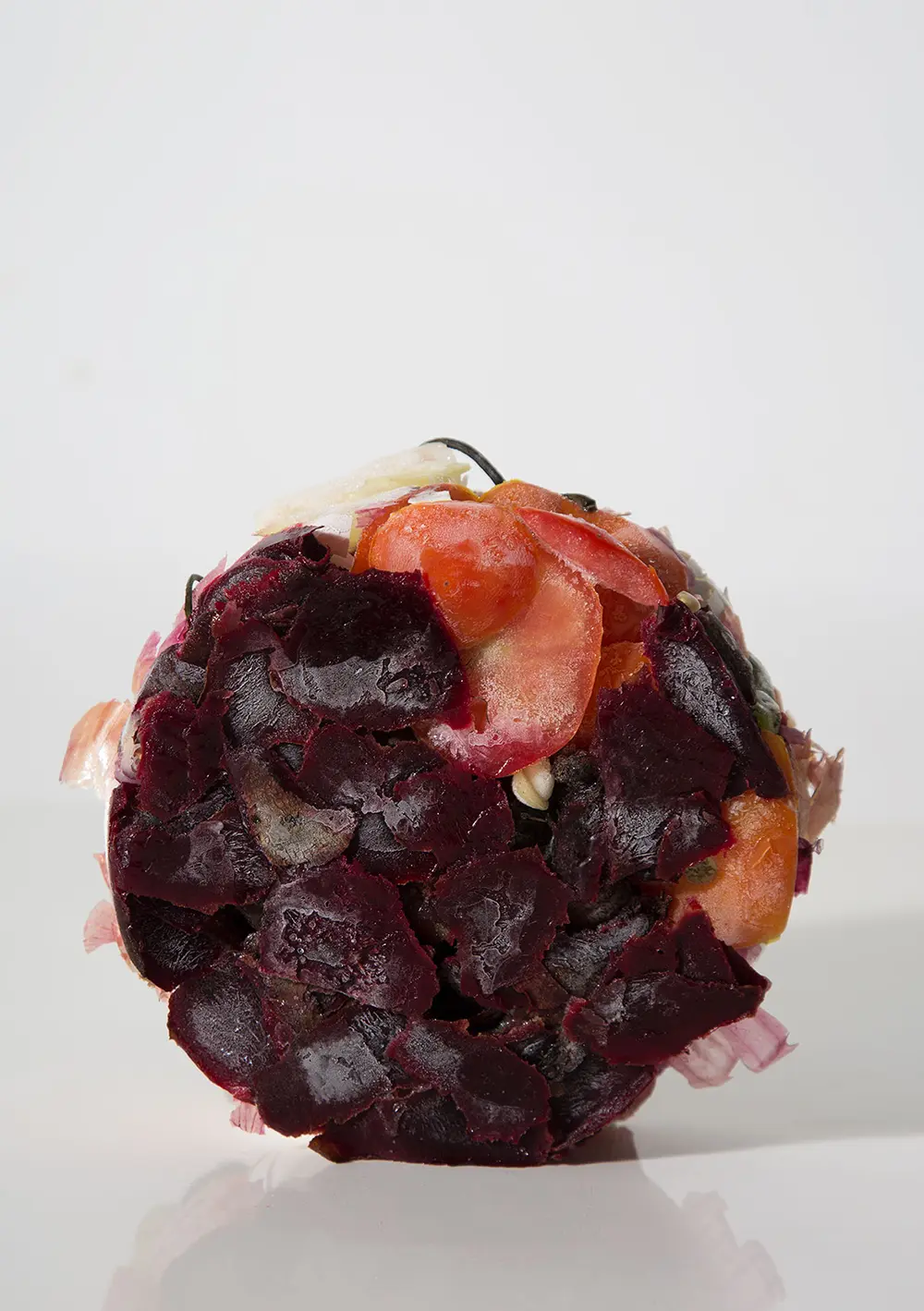
When I first saw Rhea Gupte’s images of frozen compost, I had a weird moment of recognition. I’ve been freezing kitchen scraps for years, future broth bits tucked away in neat little bags. But Gupte’s COMPOST series takes that familiar habit and turns it into something quietly powerful. Her frozen blocks of food waste feel less like leftovers and more like time capsules, layered records of everyday life.
The series began during the pandemic in her home in Goa, where Gupte started photographing what her household was already discarding. No new materials, no extra waste — just attention. That’s what makes this food waste art so compelling. It asks a simple but uncomfortable question: why do we assume what we throw away has no value?
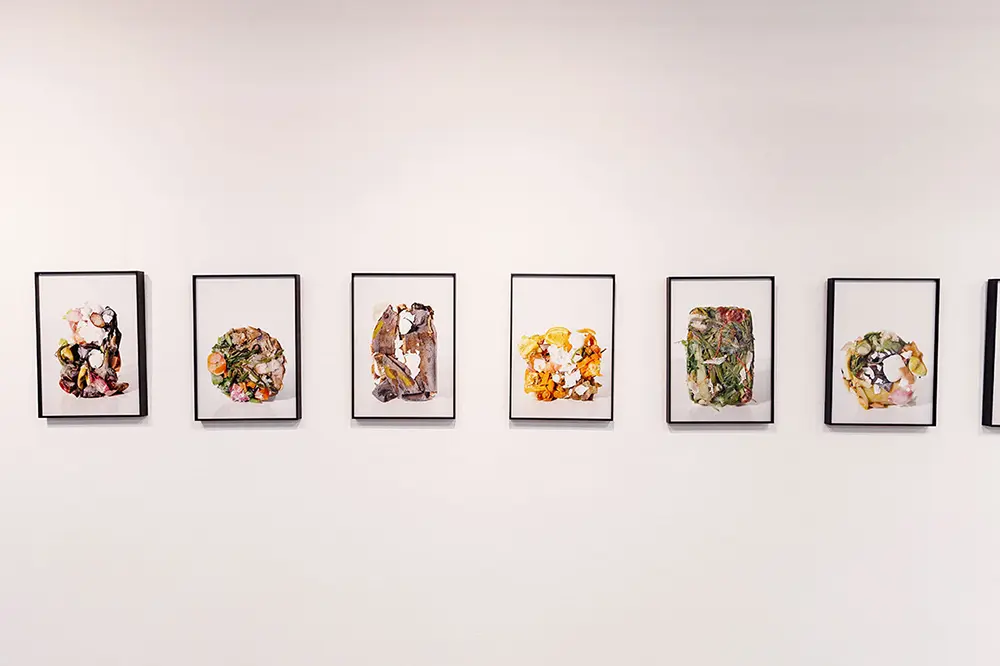
Recently, COMPOST was shown at BLEUR Gallery in London, where the exhibition expanded beyond the walls. A zero-waste supper club brought the work to life through food and conversation, led by Bengali chef Sohini Banerjee. Suddenly, sustainability and art weren’t abstract ideas — they were shared experiences at the table.
For me, this work hits close to home. Making broth from scraps feels like a small act, but it’s deeply satisfying. It slows you down. It makes you look again. Like Gupte’s work, it reminds us that sustainability doesn’t have to be loud or perfect. Sometimes, it starts quietly — tucked away in the back of the freezer.