

There’s something timeless about black and white animal prints. With color stripped away, the focus shifts to shape, emotion, and light. What remains is raw, honest, and striking. These images offer an artistic interpretation of the wild that feels both intimate and iconic.
As a fine art wildlife photographer, I’ve always been drawn to the quiet power of monochrome. While the African savanna explodes with color and drama, there are moments when color distracts from the story I want to tell. The intense look of a lion, the rough skin of an elephant, or the clear patterns on a zebra’s face often come through more strongly in black and white.
In this post, I’d like to share how these images come to life, from the wild settings where I capture them to the fine art prints that end up on collectors’ walls.
The Moment in the Wild
Every image begins with a moment in nature. Sometimes it’s fast and unpredictable, like a leopard leaping from a tree or a pair of giraffes clashing necks in slow-motion combat. Other times, it’s quiet and still. A rhino standing alone in morning mist. A mother cheetah watching over her cubs from a distance.
I use medium to wide-angle lenses as often as I can. This encourages me to get physically close to the animal and create images that feel personal and immersive. Rather than isolating the subject from a distance, I try to place the viewer inside the scene. You are not just observing. You are present.
Not every encounter is right for black and white. I look for moments with strong contrast, compelling texture, and emotional weight. These elements form the foundation of a successful black and white wildlife print.
Why Black and White?
Color adds beauty, but it can also distract. Monochrome removes those distractions and brings the subject into sharper emotional focus.
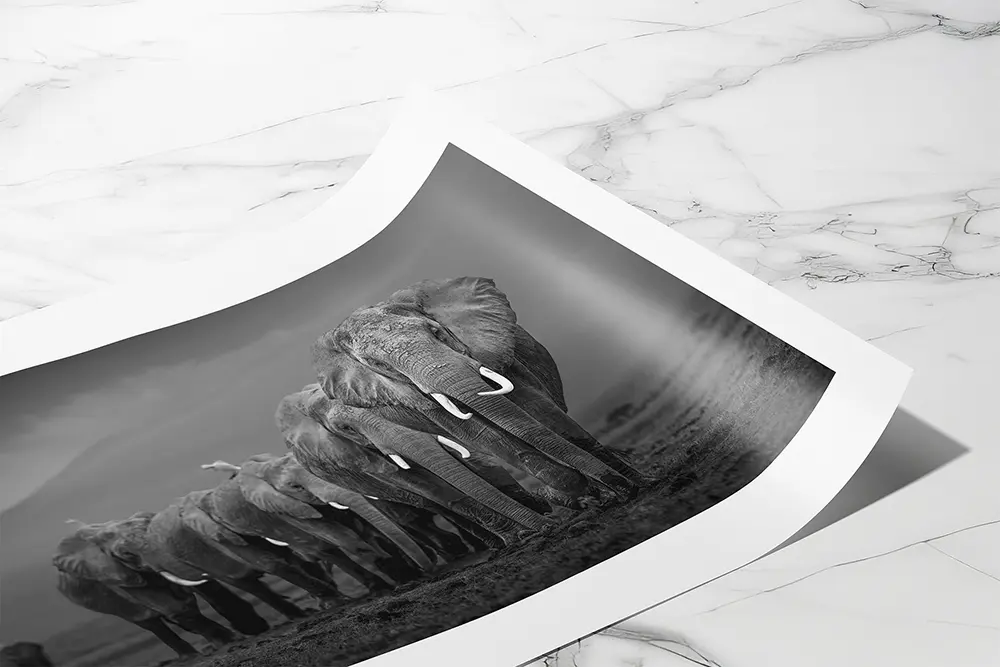
For example, an elephant print in color might highlight the warmth of the afternoon light or the tones of the savanna. But in black and white, the deep lines of the skin and the shape of the tusks take center stage. The photograph becomes about form and feeling rather than hue.
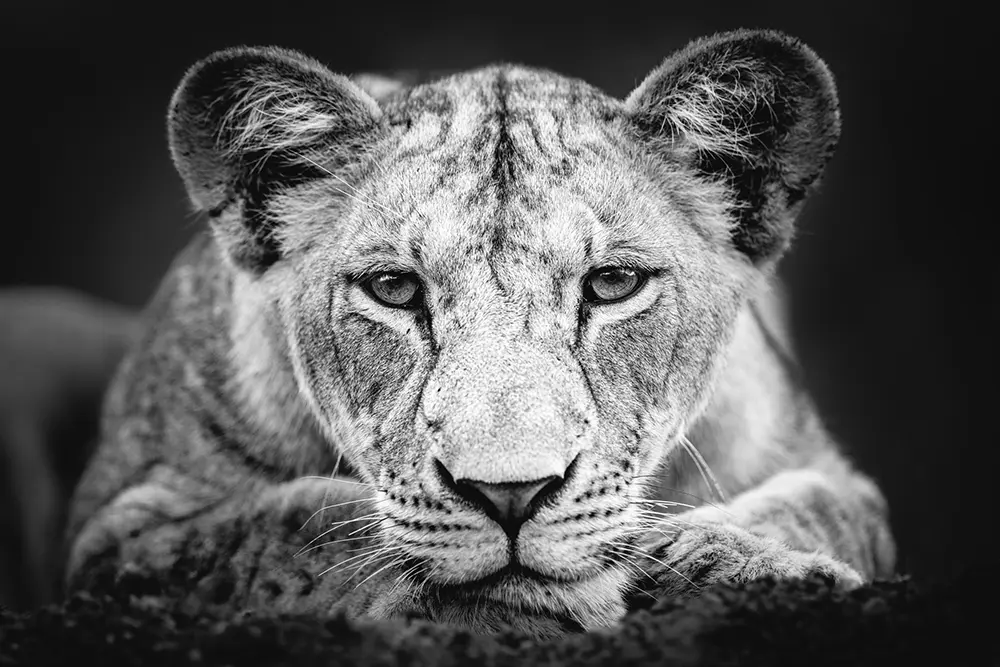
Lion prints often gain intensity in monochrome. The shadows seem longer, the eyes more commanding, and the mane becomes a powerful texture. The same can be said of a zebra print, where natural contrast becomes a bold visual pattern. These prints do not just depict animals. They reveal character and for me that is more important.
From Camera to Gallery Wall
Once I capture an image that holds something special, the work begins again. Turning a wild moment into a fine art print is a slow and deliberate process.
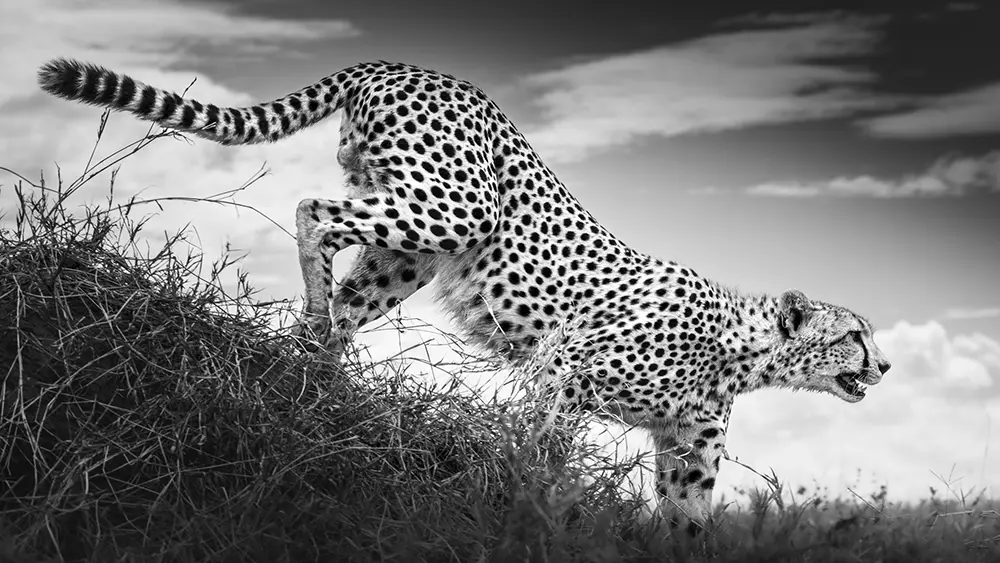
Editing black and white photographs requires care. It is not about simply removing color. It involves managing contrast, tone, and balance. Every detail matters, from the highlights on a cheetah’s back to the shadows around a gorilla’s face.
I print on museum-grade materials, often using baryta photographic paper. This paper gives depth to blacks and retains detail in lighter areas. It helps preserve the story told in the image.
All my prints are released as limited editions. Each one is signed, numbered, and accompanied by a certificate of authenticity. The intention is not to mass-produce, but to create meaningful pieces that collectors can connect with over time.
How These Prints Live in Space
Many people who collect black and white animal prints do so because of how easily they fit into their living spaces. These prints suit a wide range of styles. Whether the interior is clean and minimal or warm and traditional, monochrome artwork adapts.
Different species bring different energy into a room.
- An elephant print often carries calm and quiet strength. It anchors a space with its grounded presence.
- A lion print feels bold and regal. It adds drama and intensity to a hallway, study, or entryway.
- A zebra print creates visual energy through pattern. It pairs well with modern interiors or monochrome palettes.
- A cheetah print introduces motion and elegance. It suits minimalist rooms or creative spaces.
- A gorilla print leans into reflection and emotion. It belongs in places where people pause and think.
Because they lack strong color cues, black and white wildlife prints do not clash with surroundings. Instead, they integrate and elevate.
A Print That Tells a Story
What I value most is when someone connects emotionally with a print. That connection might come from a personal experience in nature, a fascination with a certain species, or simply a mood the image evokes.
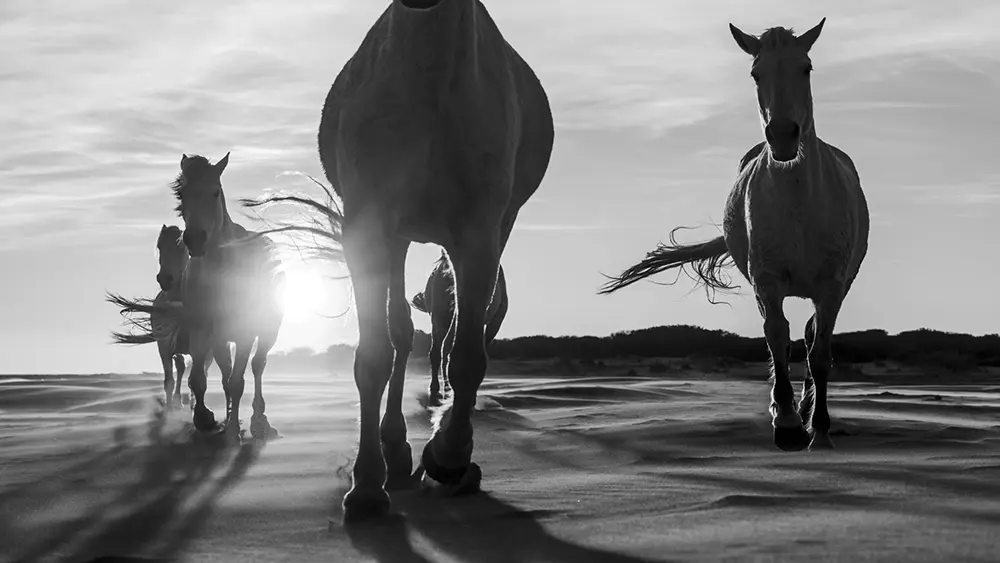
Some collectors gravitate toward lion prints for their power. Others are drawn to elephants or zebras for their symbolic weight. Horse prints from places like the Camargue carry an ethereal, dreamlike quality that speaks to a different kind of aesthetic.
The beauty of wildlife photography in black and white is that it invites emotion without instruction. It allows space for personal interpretation. That is what makes these pieces feel alive.
Final Thoughts
Animal prints in black and white do more than show the wild. They bring a sense of calm, focus, and honesty into a space. These images come from real moments in nature but also belong in homes and studios, connecting two very different worlds.
Each photograph starts with time in the field, often waiting quietly. Later, it’s shaped through careful editing and printing. By the time it reaches a wall, it carries something more than just an image. It holds a memory, a feeling, a quiet connection to nature.
Some people are drawn to the steady strength of elephants. Others connect with the patterns of zebras or the thoughtful expressions of primates. Whatever the subject, black and white gives space to see clearly. It strips away distraction and brings forward what really matters.
From wild to wall, the journey is always worth it.