

The sofa and rug can look settled while the TV wall still feels temporary. A large black screen hangs over a small console, cords peek out at the edge, and the empty wall around it makes the whole setup look as if someone stopped halfway through the room.
Freestanding furniture can fix the proportion without a construction project. Low cabinets give the screen a base, and open wall keeps the arrangement from turning into a solid bank of furniture. Together, those pieces place the television inside a deliberate composition.
Start With the Wall, Not the Screen
Look at the full wall before choosing another cabinet. The TV is one dark shape inside a larger frame that may include a doorway, a window, or a stretch of open floor. Those interruptions matter because they determine how much visual weight the wall can carry.
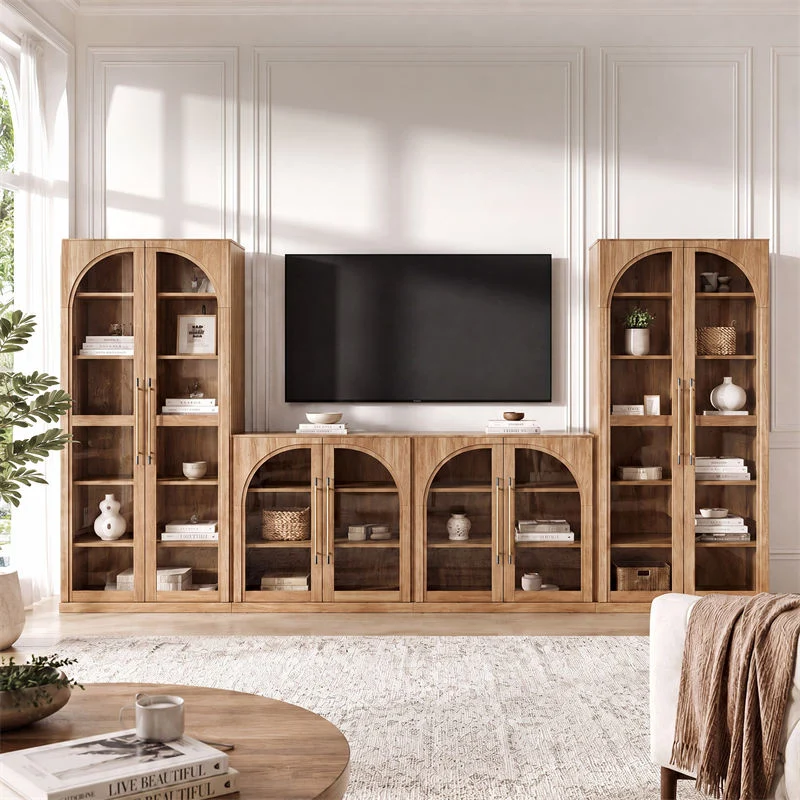
A narrow console under a wide television tends to look undersized, even when it holds every device. On a broad wall, a modular entertainment center can organize the composition around a low center and taller side pieces. Each unit remains freestanding, so the effect has structure without pretending to be custom millwork.
Resist the urge to fill the wall from corner to corner. Open space beside the cabinets gives the arrangement an edge and keeps the furniture from crowding nearby architecture. The eye then registers one composition: cabinets gathered beneath the screen with a clear boundary around them.
Give the TV Something to Belong To
A long run of low cabinets may be enough. A broad wall can take one tall cabinet when its finish connects to something across the room.
Console width is a useful visual check. A piece that reaches past the screen on both sides gives the TV a steadier base. Depth deserves the same attention. A deep cabinet can look balanced from the front and still push the coffee table too close to the sofa.
Give Display and Clutter Different Jobs
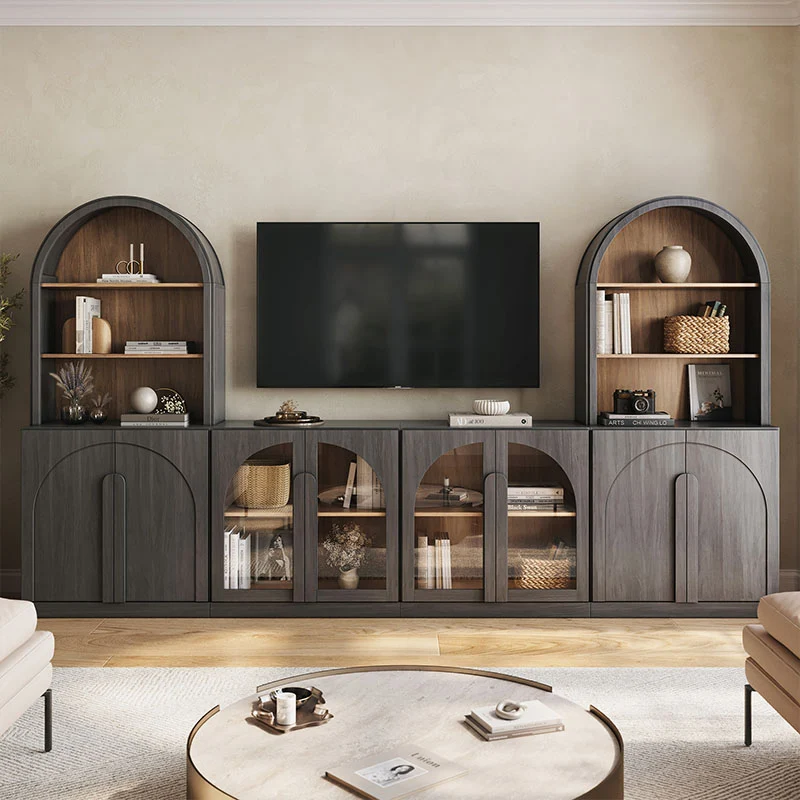
Open shelves look polished in photographs because the router, spare batteries, and half-finished puzzle have left the room. At home, those things need a door. Keep open areas for pieces worth seeing and reserve closed storage for the gear that makes the room work.
Adding modular cabinets around the media area lets the storage expand in sections. Start with the pieces the wall can support now. Another cabinet can join the group when a game console arrives or the board-game stack outgrows its shelf.
Plan access before hiding the electronics. A receiver that runs warm needs air, and a remote loses its usefulness at the back of a deep shelf. Put those items where hands and cables can reach them. A cable opening near the outlet also keeps wires from crossing an open shelf.
Symmetry Is One Option
A cabinet, TV, cabinet arrangement suits a long wall with the screen near the center. The same setup can look forced when a doorway cuts into one side or the television sits off-center. Unequal pieces can create balance in that room.
A narrow living room might take one tall cabinet on the open side and a low console beneath the screen. A shelf or a broad piece of art can carry the other side without narrowing the walkway. This leaves more open wall and gives the room a less formal balance.
Some walls need no tall storage. A low console can be enough when a window, fireplace, or large artwork shares the view. Check the wall from the sofa and from the doorway. Those two sightlines reveal a top-heavy arrangement faster than a floor plan does.
Edit What Stays on Display
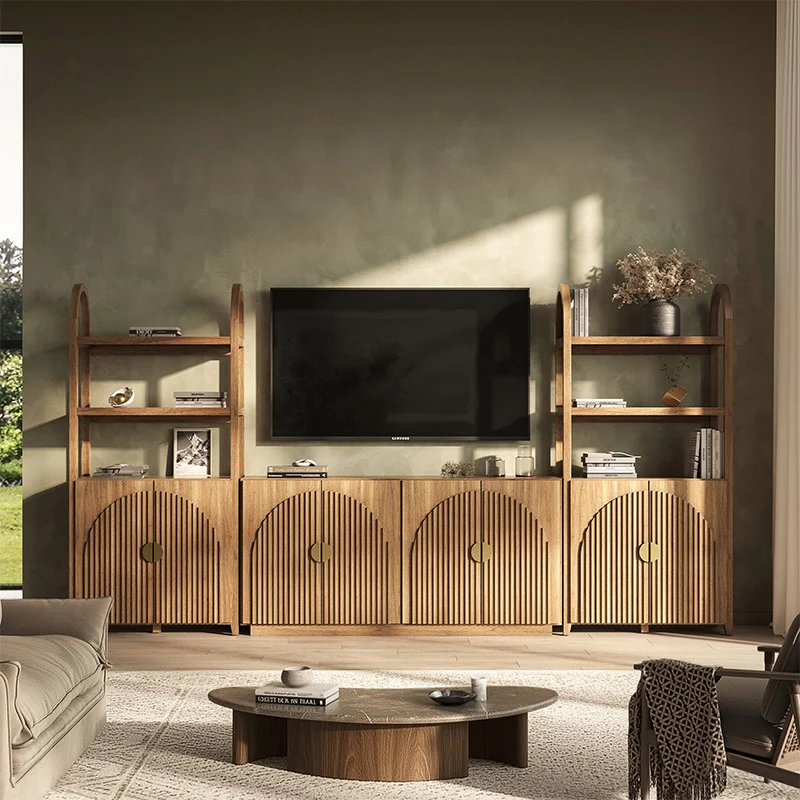
Treat each open shelf as part of the wall composition. A horizontal stack of books can hold one bay. A taller object can occupy the next. Leave the neighboring area quiet so rows of small shapes do not box in the television.
Leave Some Shelf Space Empty
Empty shelf space has a practical visual job: it separates one object from the next. Pack every bay and the shelving turns into a busy border around the screen. Give the largest object room, then remove anything that repeats its shape without adding a new texture or color.
Take a phone photo with the TV turned off. The smaller image exposes crowded areas. Remove one piece from the busiest shelf and look again.
Repeat Materials, Not Objects
Repeat the console’s wood tone in a frame or carry its black finish into a lamp. Different objects can share one material and still keep their own shapes and ages. That connection avoids the look of a boxed decor set.
Pull color from something that has weight in the room. A muted blue from the rug can appear in a book cover; a warm sofa fabric can return in a ceramic piece. The repeated color ties the TV wall to the room’s main palette.
Limit strong texture to one large surface. Fluted cabinet fronts and bold stone veining compete when both sit in the same view. Let one hold the pattern and place smoother finishes around it. The screen already brings enough contrast to the center of the wall.
See What Changes After Dark
Turn off the TV after sunset and look at the wall again. A ceiling fixture can flatten wood grain and leave the corners dull. A shaded lamp beside the media unit or a soft wall wash gives the furniture shape without throwing light across the screen.
Backlighting needs restraint. A concealed halo can soften the edge of the television. Visible LED dots and bright color pull the eye back toward the equipment. Use the glow to reveal the wall surface, not to turn the screen into a gadget display.
Match the light to the finish. Light skimming across fluted wood or textured plaster brings out its relief, while polished stone needs a softer angle to reduce glare. Test the fixture with the screen on and off from the seat where people watch TV. Check it again from the doorway.
Walk into the room with the TV off. If the screen no longer looks like a black rectangle floating over a small stand, stop adding pieces. The wall has enough structure, and the freestanding furniture can still move when the room changes.