

Home appliances used to signal their function through visible mechanics — dials, exposed motors, hard plastic housings that made no attempt to disguise what was underneath. That language is fading. Across categories, from electric toothbrushes with built-in cameras to coffee machines with touch displays, appliance design is converging on the same idea: sensors that quietly do the thinking, housings that hide the mechanics, and maintenance routines the object handles on its own. Floor care is where this shift shows up most clearly.
Sensors as the New Design Language
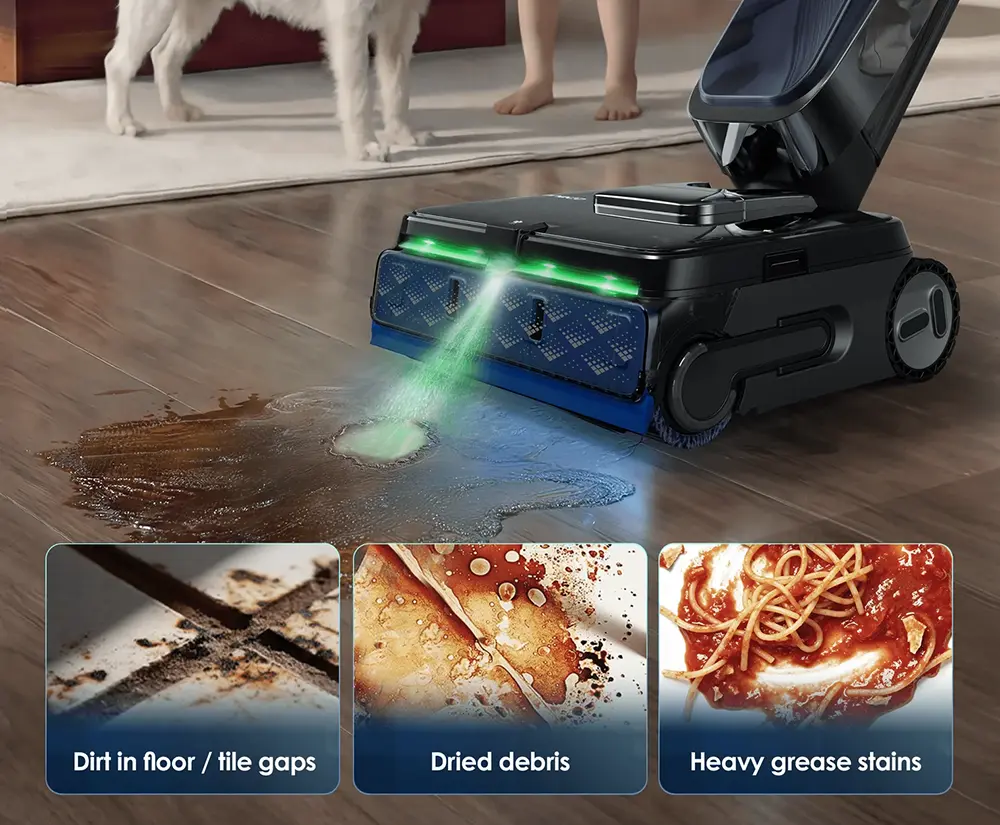
A decade ago, a vacuum’s “smart” feature was a battery indicator. Now, dirt-detection sensors read surface type and debris density in real time, adjusting suction or water output automatically. That shift changes the industrial design brief entirely — instead of a control panel full of manual settings, the product surface can stay clean and minimal, because the decision-making has moved inside the housing rather than onto a dial.
Self-Maintenance as a Product Feature
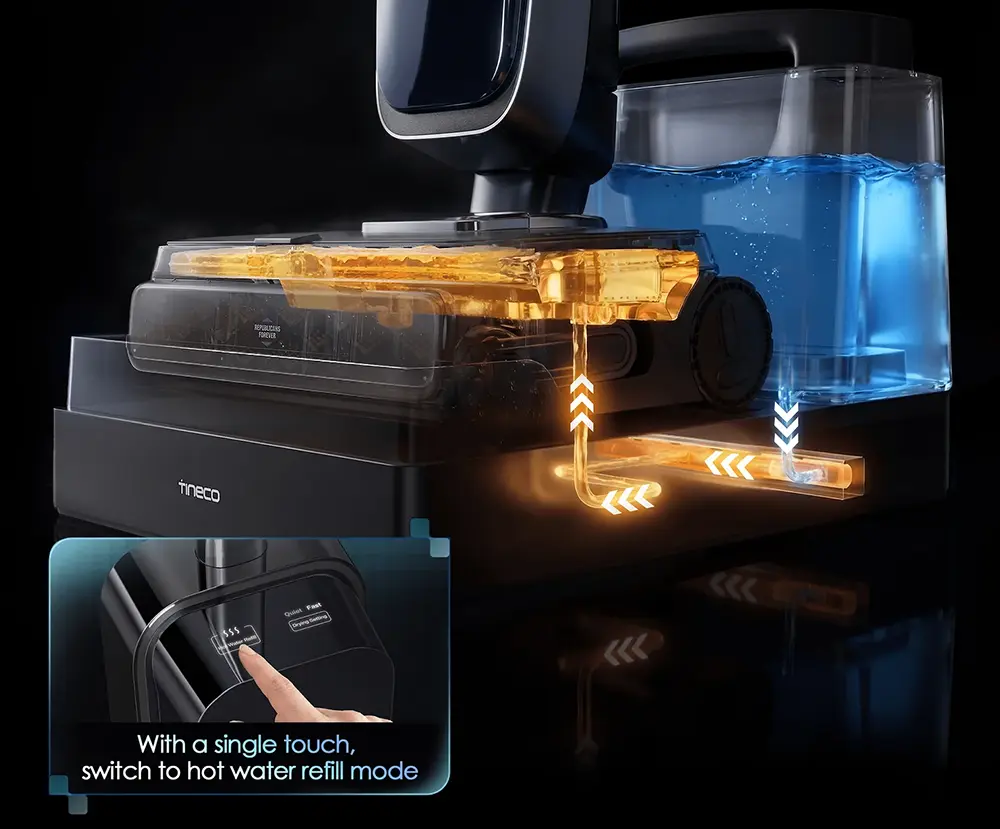
The second shift is maintenance. Older intelligent appliances required the user to disassemble, rinse, and dry components by hand, which meant designers had to plan for easy access panels and visible seams. A self-cleaning base station removes that requirement, letting the product form follow a cleaner logic: fewer visible joints, a single dock the object returns to, and a maintenance cycle the user never has to think about.
Tineco is a useful case study for both shifts at once, since its recent lineup applies sensor-driven cleaning and automated maintenance to the same category — floor care — that spent decades resisting exactly this kind of redesign.
That’s most visible in a cordless wet dry vacuum mop, a product category that, by definition, has to combine two previously separate tools’ worth of mechanics into one housing without the result looking cluttered or over-engineered.
Product Form Across the Lineup
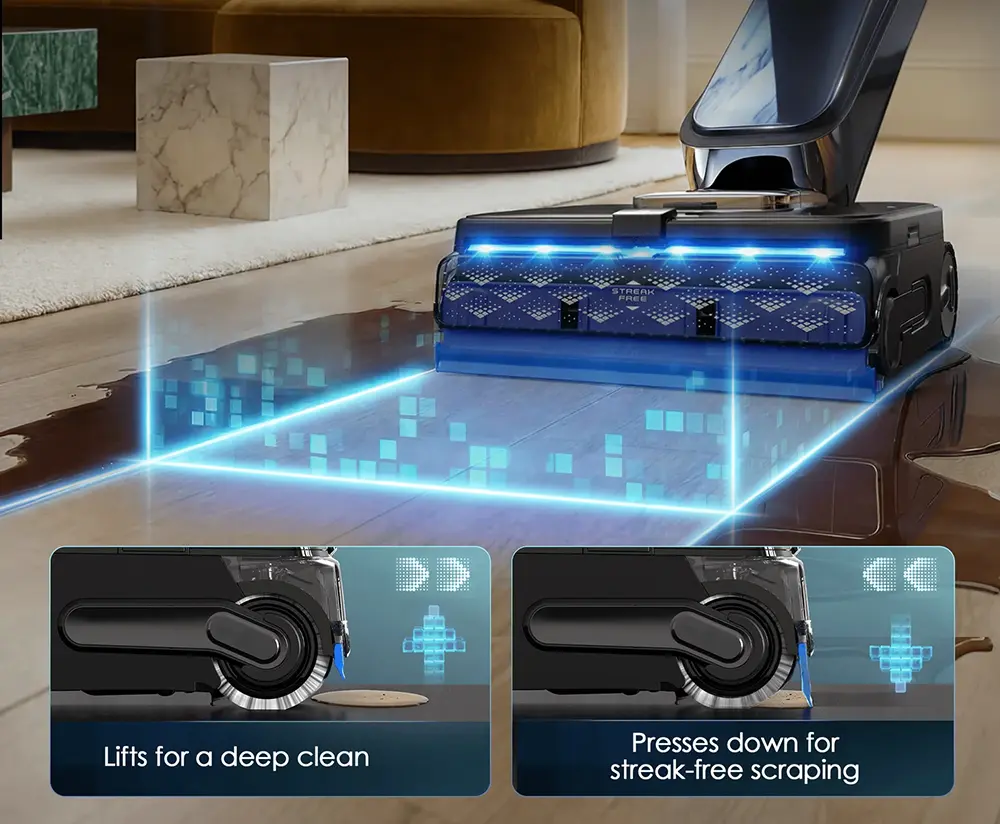
The Tineco FLOOR ONE S9 Artist Steam Wet Dry Vacuum Cleaner pairs its dirt-detection sensor with a display that surfaces just enough information to feel intentional rather than cluttered — a small screen instead of a bank of switches.
The Tineco FLOOR ONE STATION S9 Scientist Pro Wet Dry Vacuum Cleaner takes self-maintenance furthest, consolidating rinsing, drying, and detergent refill into a single column form that reads more like a small appliance than a cleaning tool’s storage base.
The Tineco S7 Stretch Ultra solves a mechanical problem — reaching under low furniture — through an extendable tube rather than a bulkier housing, keeping the product’s footprint small even as its functional range grows.
The Tineco S7 Stretch Steam adds a heating element and steam chamber to that same compact body, a genuine engineering constraint that the design manages to absorb without adding visible bulk.
Compared With Dreame and Dyson
Dreame’s recent designs tend to expose more of their internal mechanics — visible sensor housings, more angular forms — which reads as technical but less resolved as an object. Dyson’s WashG1 takes a more restrained approach to form, though its self-maintenance system is less integrated than Tineco’s newer base stations. Tineco’s product language sits closer to consumer electronics than traditional appliance design, which is arguably the clearest evidence of where the category is heading.
Tineco Day and Tineco Pet Day
With Tineco Day and Tineco Pet Day approaching, the brand is expected to push its full sensor-and-self-maintenance lineup — the S9 Artist Steam, Station S9, S7 Stretch Ultra, the PURE ONE A90S, and the Station 5 and Station 5 Pro — as the throughline connecting a fairly wide product range.
FAQ
Tineco S9 Artist Steam Pro vs Roborock F25 Ultra: which has the more resolved design?
The S9 Artist Steam Pro’s sensor and display are more tightly integrated into a single housing, while the F25 Ultra keeps a more conventional, compact form with less visible sensor technology.
Tineco S9 Artist Steam Pro vs Dreame H15 Pro: how does their sensor design differ?
Both use dirt-detection sensors, but the S9 Artist Steam Pro’s response feels more built into the product’s core logic, while the H15 Pro’s sensor housing reads as a more visibly bolted-on component.
Tineco Stretch S6 vs Dreame H14 Pro: which handles the reach-and-form trade-off better?
The Stretch S6 keeps a slimmer body while still extending for low furniture, whereas the H14 Pro prioritizes suction hardware in a way that adds some visible bulk.
Tineco A90S vs Dyson V15 for pet hair and carpet: is one better designed for the task?
The A90S’s brush roll and housing are purpose-built around pet hair specifically, while the V15 relies more on raw suction and requires more manual upkeep to stay effective.
Tineco Pure One S70 vs Dyson V15 Detect: which better reflects the self-maintenance shift?
The Pure One S70 leans lighter on automated maintenance than Tineco’s wet-dry line, but still edges out the V15 Detect on ease of upkeep, since the Dyson still depends on manual bin and filter cleaning.
Closing Thought
The appliances defining this category right now aren’t winning on raw specs alone — they’re winning by absorbing complexity that used to live on the outside of the product, in dials and visible mechanics, and moving it inside, into sensors and self-maintenance systems the user never sees. That’s less a vacuum-cleaner story than a broader one about where product design is heading.