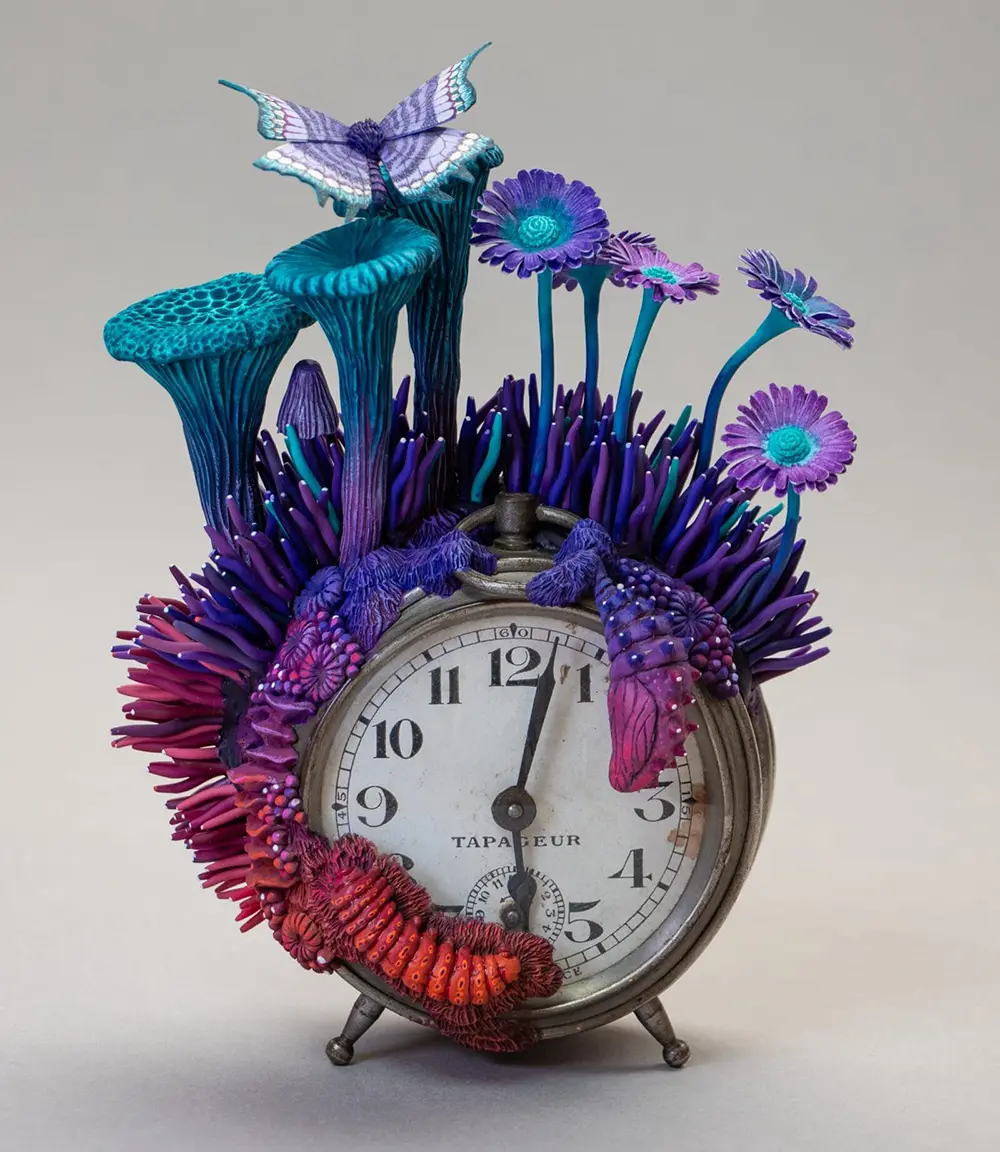
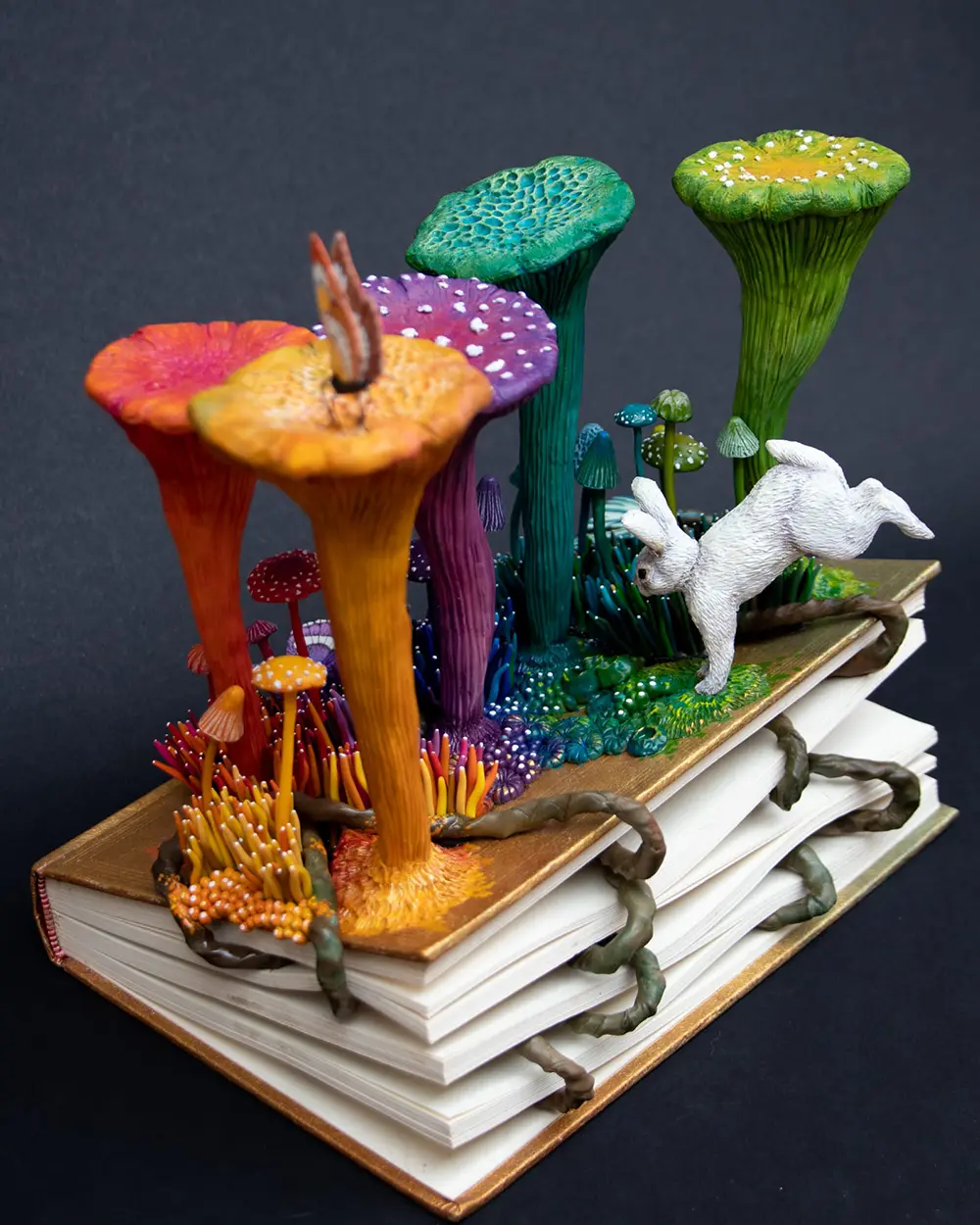
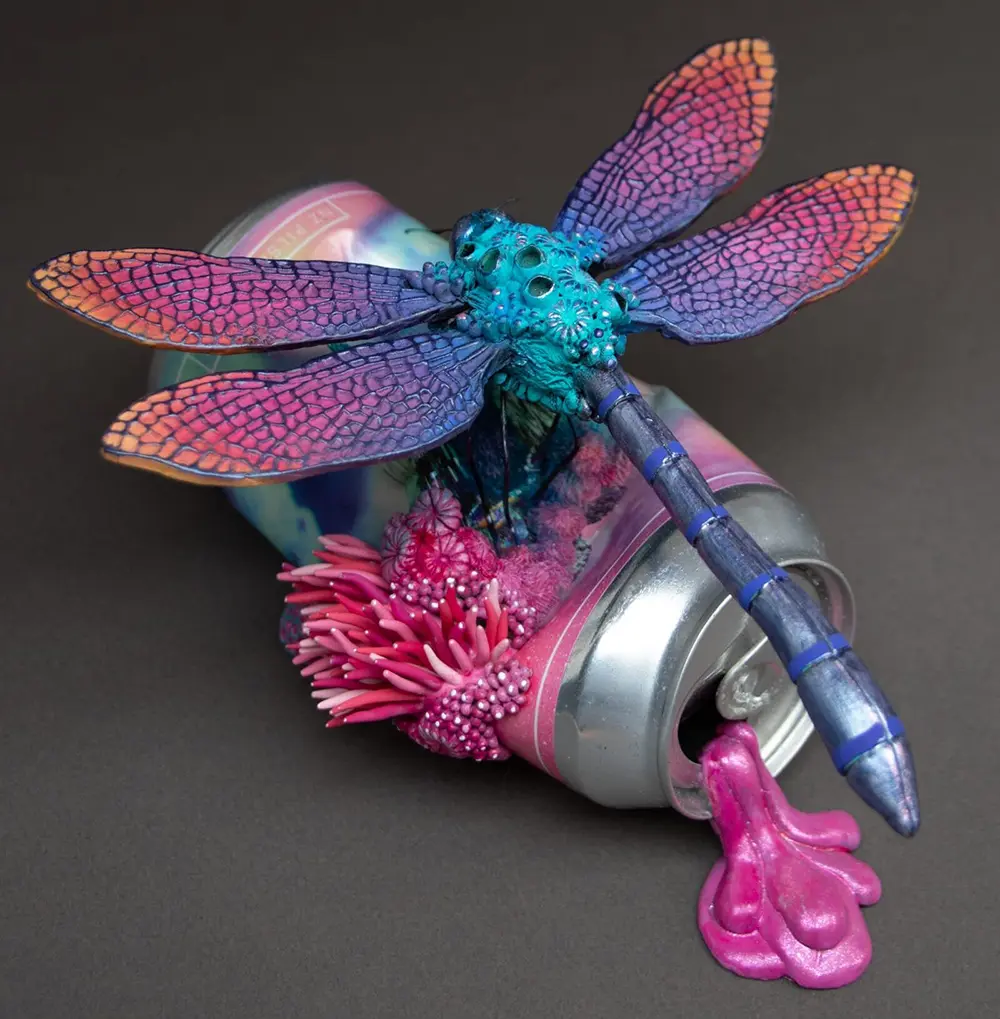
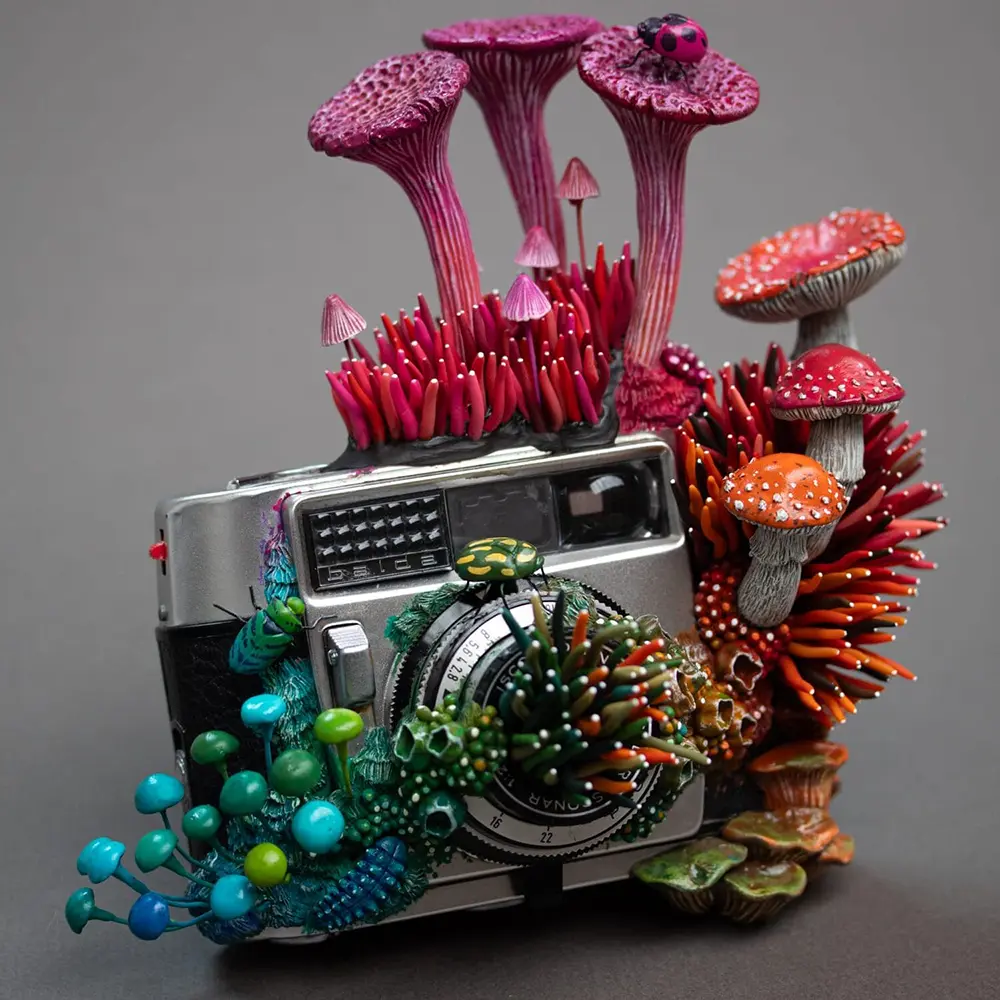
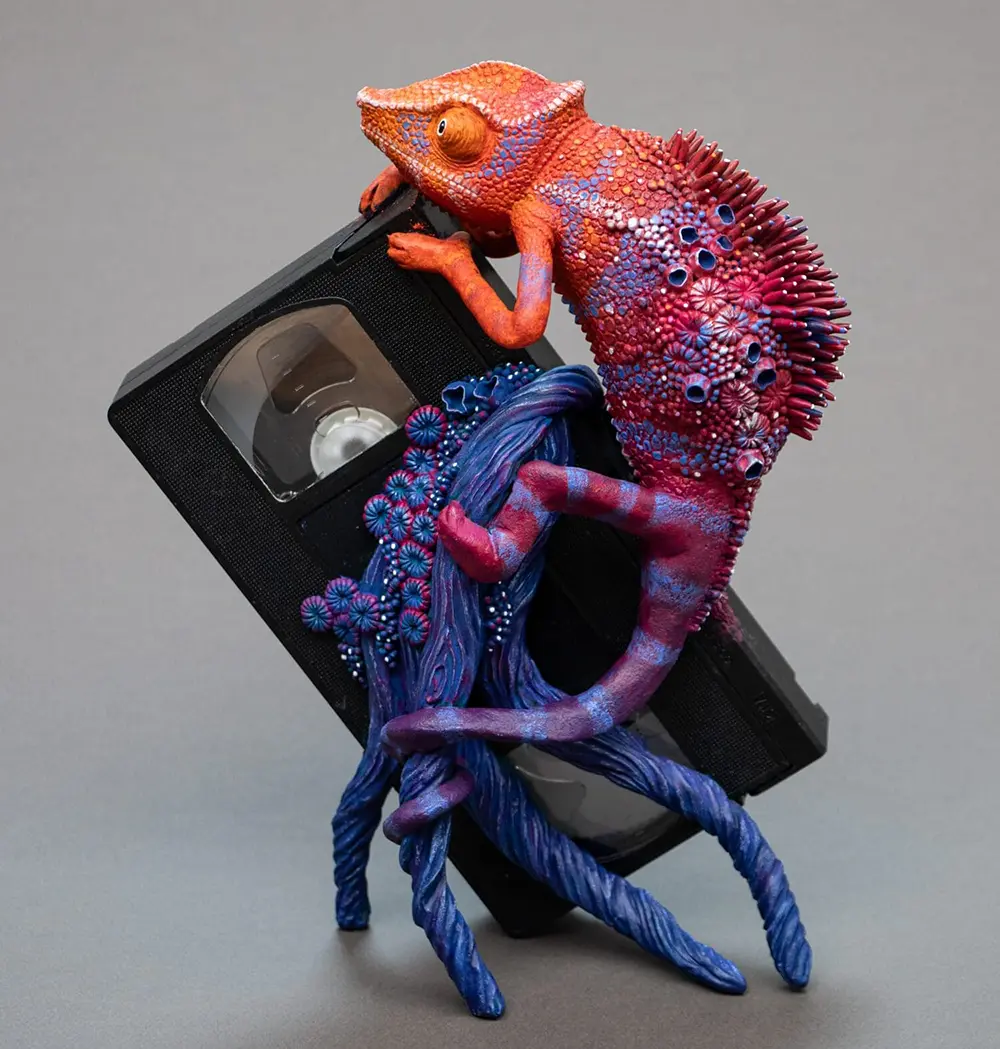
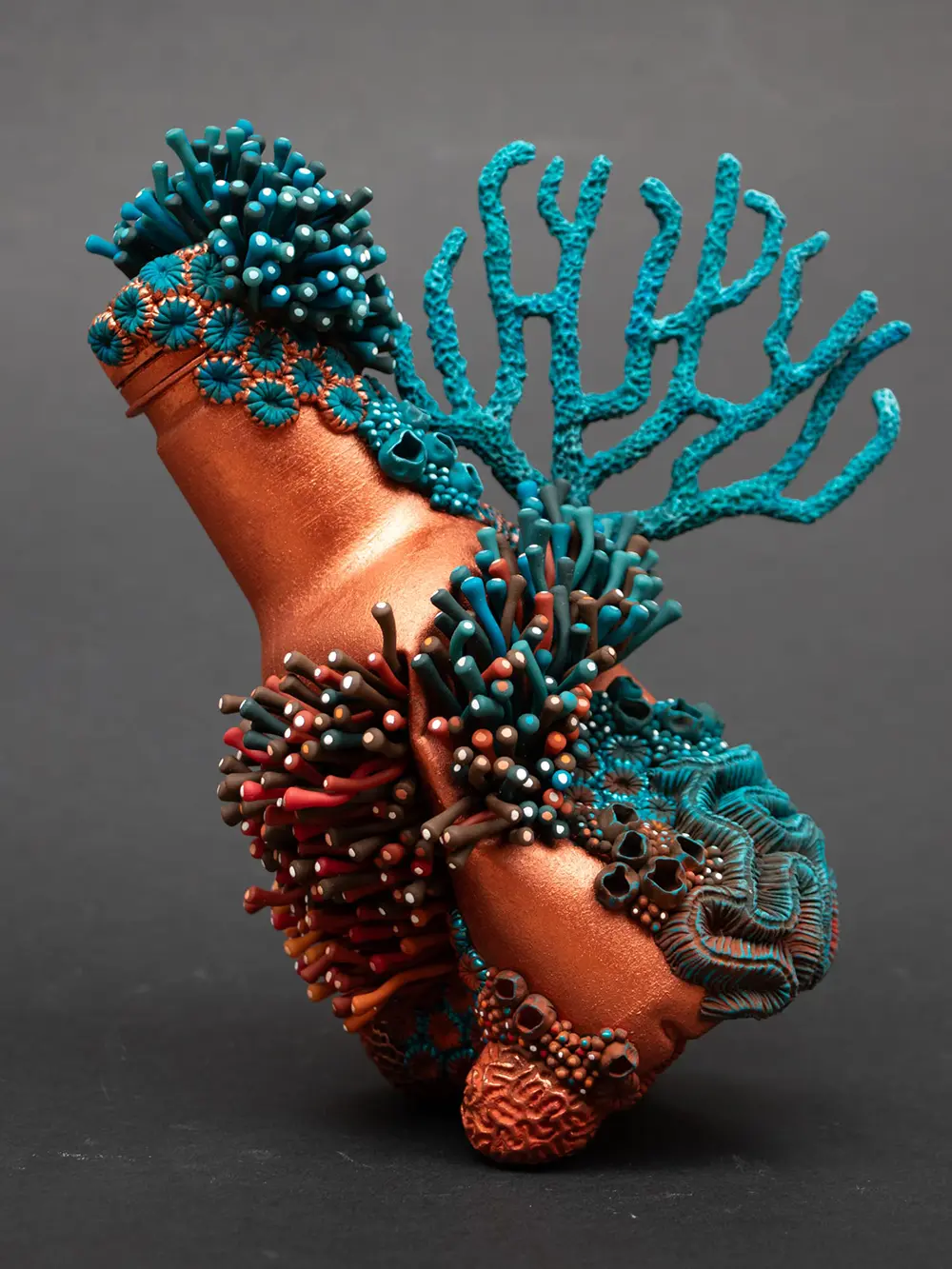
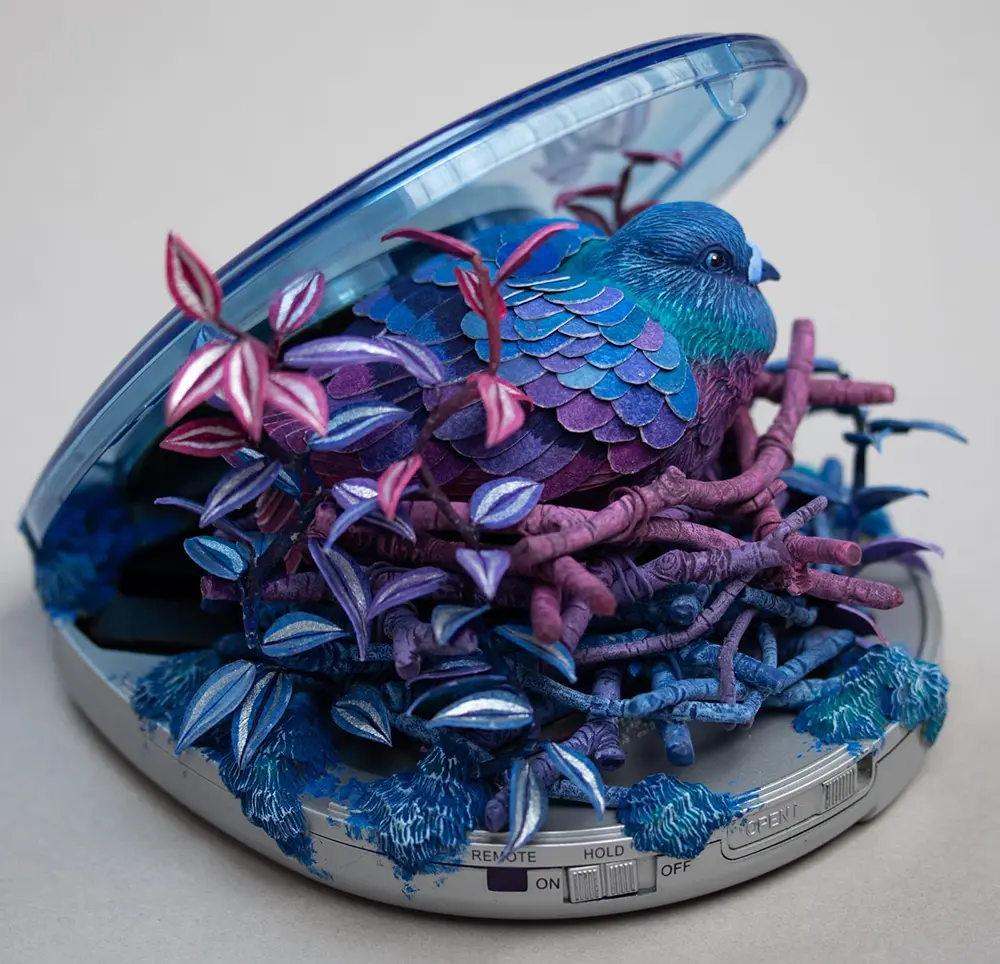
What would the world look like if humans disappeared? For French artist Stéphanie Kilgast, the answer is both vibrant and thought-provoking. Her colorful, post-apocalyptic sculptures imagine a world without humans, where nature takes over the remnants of our existence.
“I remove humanity from my work,” Kilgast explains, “but I keep what we’ve left behind—our objects, buildings, and trash.” Around these leftovers, life blossoms. Mushrooms sprout, plants wind their way through cracks, and corals wrap around forgotten items. In this imagined future, flora and fauna thrive where consumer culture once dominated.
Her sculptures often start with discarded or outdated objects: soda cans, glass bottles, VHS tapes, or old alarm clocks—things once ordinary, now nearly obsolete. From there, she transforms them into uncanny habitats, bursting with bright fungi, lichens, and other forms of life. The result is a symbiosis between man-made and natural, a joyful reminder of balance and renewal.
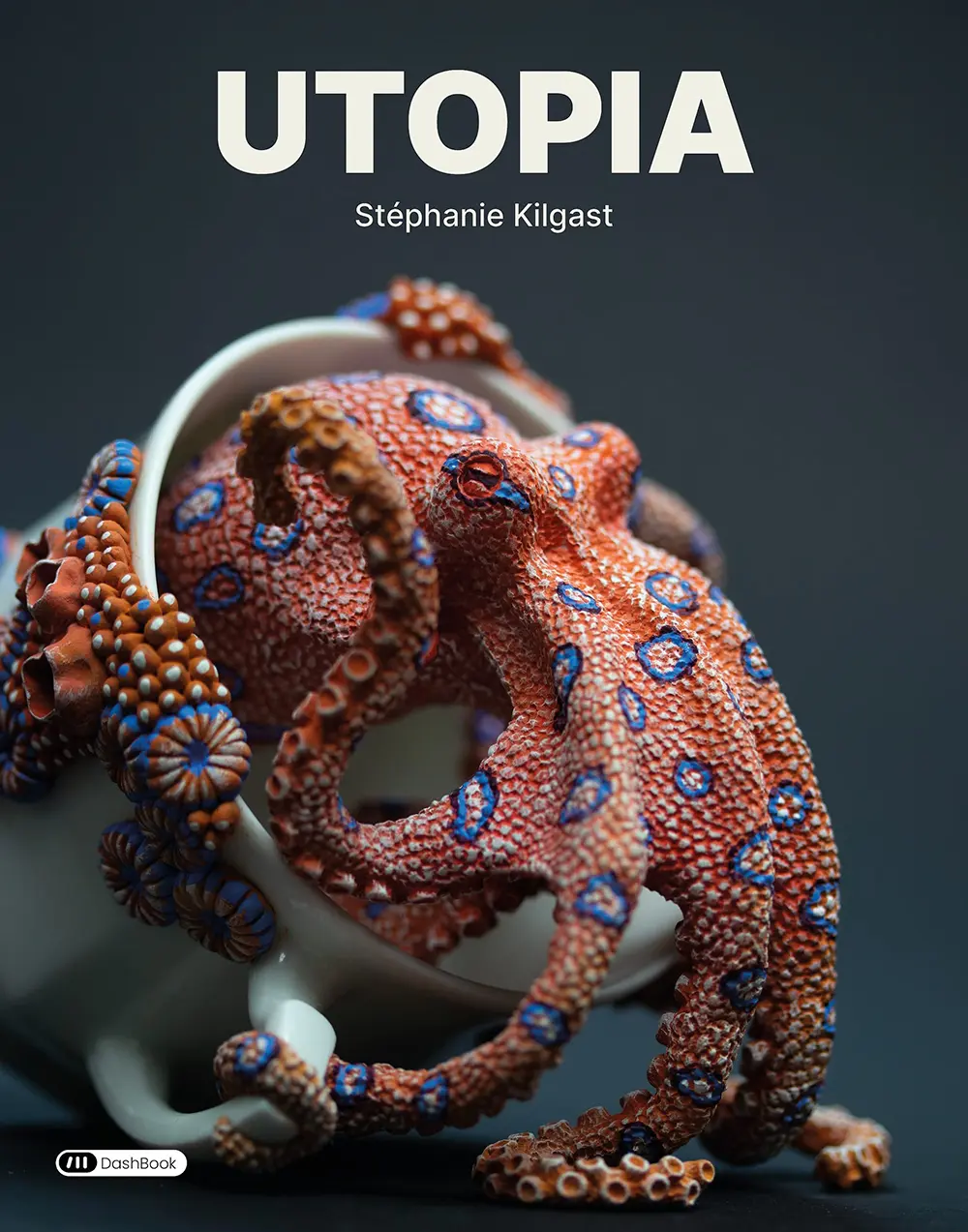
Now, Kilgast is gathering a decade of this work into a new volume titled Utopia book. The publication will include sculptures, paintings, and pages from her sketchbooks, as well as essays and a full catalogue of her creations from the past ten years. It’s not just a look back—it’s a celebration of resilience, creativity, and hope through art.
The book will go to print if at least 150 pre-orders are made by October 3, with shipping expected in December. For those who want to own a piece of this vision, now’s the perfect time to secure a copy.
Explore more of Stéphanie Kilgast’s work and updates about Utopia through her website and Instagram—because sometimes the future looks brighter when nature takes the lead.