

Modern playgrounds serve more than just a play respite for children. They engage, excite, and sometimes challenge little ones through multi-sensory spaces, tech-integrated activations, and innovative designs. They are an inspiring destination for children of all ages and abilities to gather and play. And most importantly, children want to play on them!
In today’s digital-driven world, pulling children away from screens and bringing them into a centralized, outdoor location for play can test parents’ patience. While the digital world has its advantages, it can also create a mostly sedentary environment. The fascination of social media, combined with enticing video games, can lead children to stay indoors as opposed to getting outside. However, children who take advantage of modern playgrounds will reap the benefits of physical, cognitive, and social development.
Many modern playgrounds are merging nature play with inclusive access to create universally designed spaces with various elements. These playgrounds go beyond the traditional swingset and slide setup to spark children’s imagination, inviting them to integrate fun into their free time. Below are key principles of modern inclusive playgrounds that incorporate nature play.
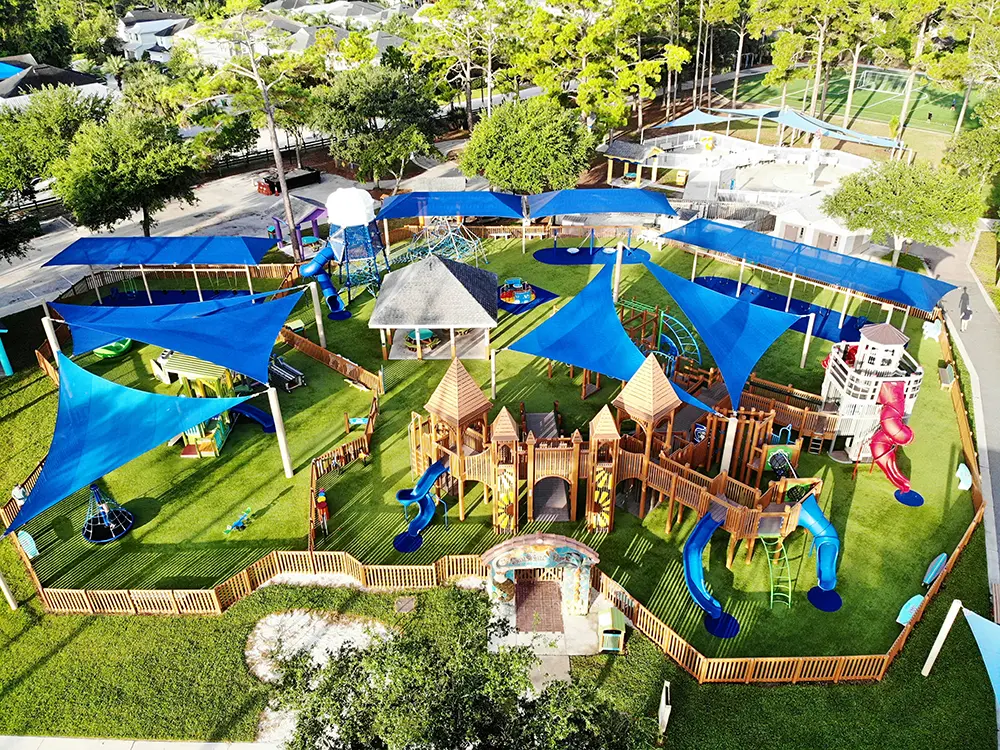
The Use of Natural Materials
When you think of a playground, the first image that comes to mind may be the swingset that was in your backyard as a kid. Or perhaps you’re reminded of the playground at your elementary school. The purpose of playgrounds remains the same, but the materials that are leveraged to build them have drastically changed over time.
Before, a wooden playground was the most “organic” offering. Today, playgrounds are blending the use of natural materials into their designs. Sensory gardens full of herbs and flowers can entice children to learn about their natural habits, encouraging them to utilize their sense of smell, touch, and perhaps taste, too. Rocks, logs, and boulders are finding their way into the construction of playgrounds; rather than removing them from the property, many designers are utilizing them as part of the theme and adding playground equipment around them. These materials are great for learning how to balance, and can be another sensory element.
Sand pits and even mud kitchens encourage creativity, allowing kids to make up pretend stories of making dinner for their friends, serving dishes, and pretend eating together. Getting their hands dirty is just part of the sensory experience, and can help with fine motor skills and coordination. Water features are another exciting element that can be a fun play space for kids during the hottest months of the year.
A less messy component of nature-based modern playgrounds is the use of wood mulch, engineered wood fiber, or pea gravel for surfacing. All of these materials can be good for ground cover as they can dampen accidental falls and meet necessary safety standards.
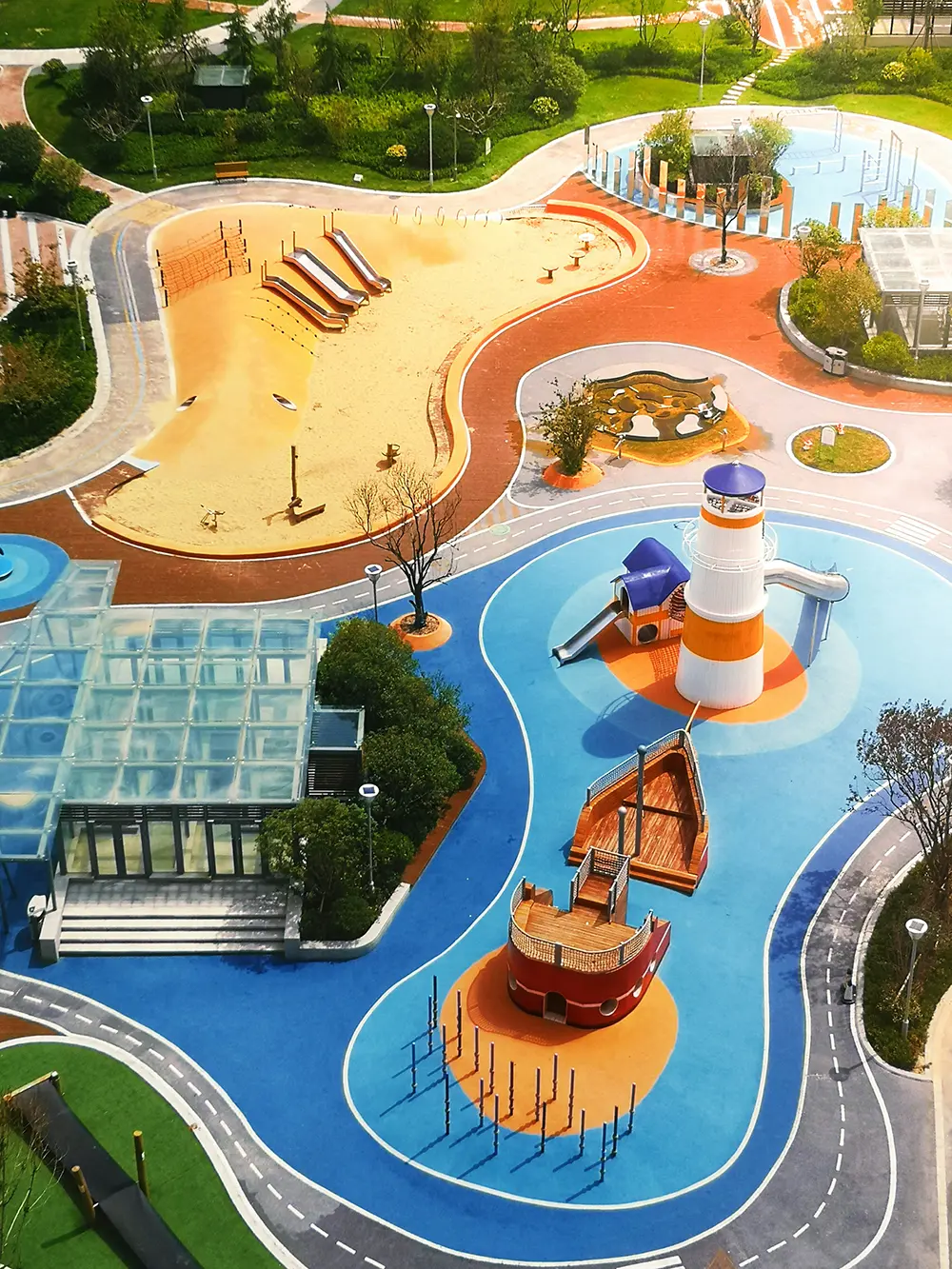
Inclusive Design and Access
In addition to a nature-based play area, modern playgrounds are also focused on being accessible, unified areas for children of all abilities. This allows every child, regardless of physical limitations or cognitive abilities, to play together.
Inclusive design really starts from the ground up. Unified surfacing with smooth, firm surfaces ensures that the playground is wheelchair accessible. Pathways should be wide and sloped to connect all of the playground zones or areas, allowing for seamless, smooth transitions between play stations.
In terms of the equipment itself, adaptive swings and wheelchair-accessible merry-go-rounds or spinners are all good choices. Ramps and ADA-compliant transfer stations should be integrated into equipment components as well. This allows children in wheelchairs to reach different play elements, such as slides and climbing structures. It also encourages independence and self-reliance.
Another way to encourage inclusivity is by adding a sensory play station with musical instruments, sand or water tables, and interactive tactile panels. These types of play materials can benefit all children, teaching them the importance of sharing and communication. They can also help with developing fine motor skills, from picking up objects and grasping different play structures.
One important concept for inclusive modern playgrounds is the ability for parallel play. The adaptive swing should be next to the regular swings, as opposed to a separate area. A sensory play experience should be within the same confines of the playground, not on the perimeter. This allows children to play alongside one another and helps children with different abilities to feel included and part of the fun.
Tips for Blending Nature Play with Inclusive Access
Designing a modern play that blends nature play with inclusive access can be a rewarding experience. You’ll learn which materials are the most eco-friendly and sustainable, as well as how to incorporate ground-level and accessible equipment into the final construction. Once complete, you’ll see firsthand how children of all ages and abilities thrive on a playground that encourages learning about nature and the outdoors while also providing opportunities for every child.
When planning this type of playground, consider how each child can best explore the world around them. Know that each child has a unique set of needs, so find ways to bring the best out of every one of them by supporting them through their growth and development. Perhaps it means creating visual cues such as bright colors, shapes, and tactile elements to guide movement from one station to the next. Or maybe it’s adding extra grab bars on different equipment pieces so children can steady themselves as they move. Identifying these types of needs early on will only further support the construction of the playground — one that harmonizes nature with inclusivity.