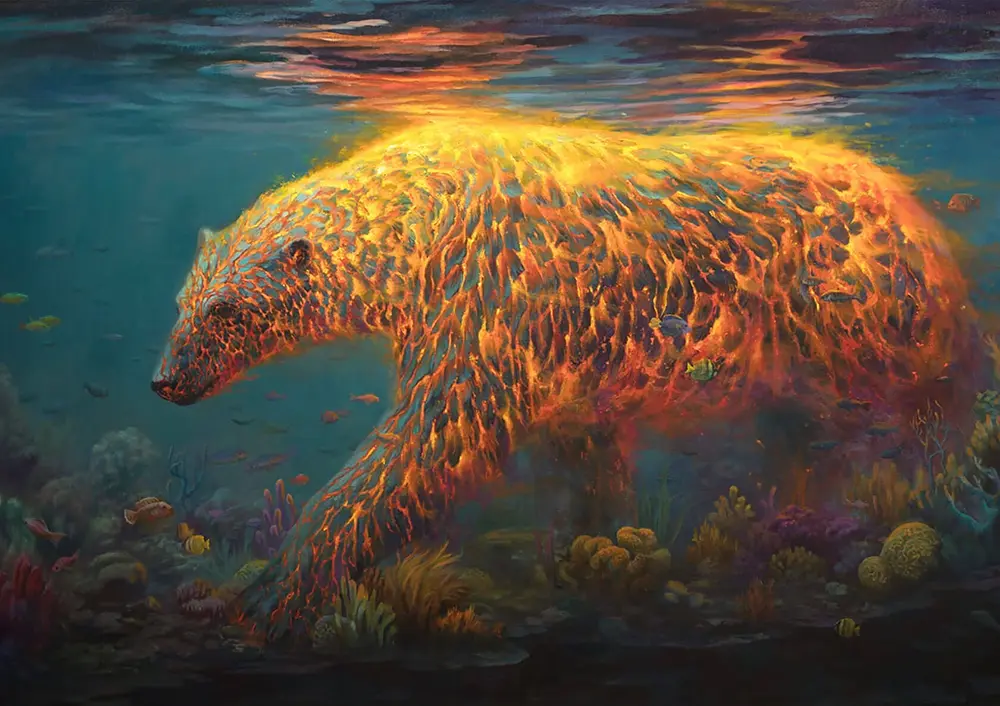
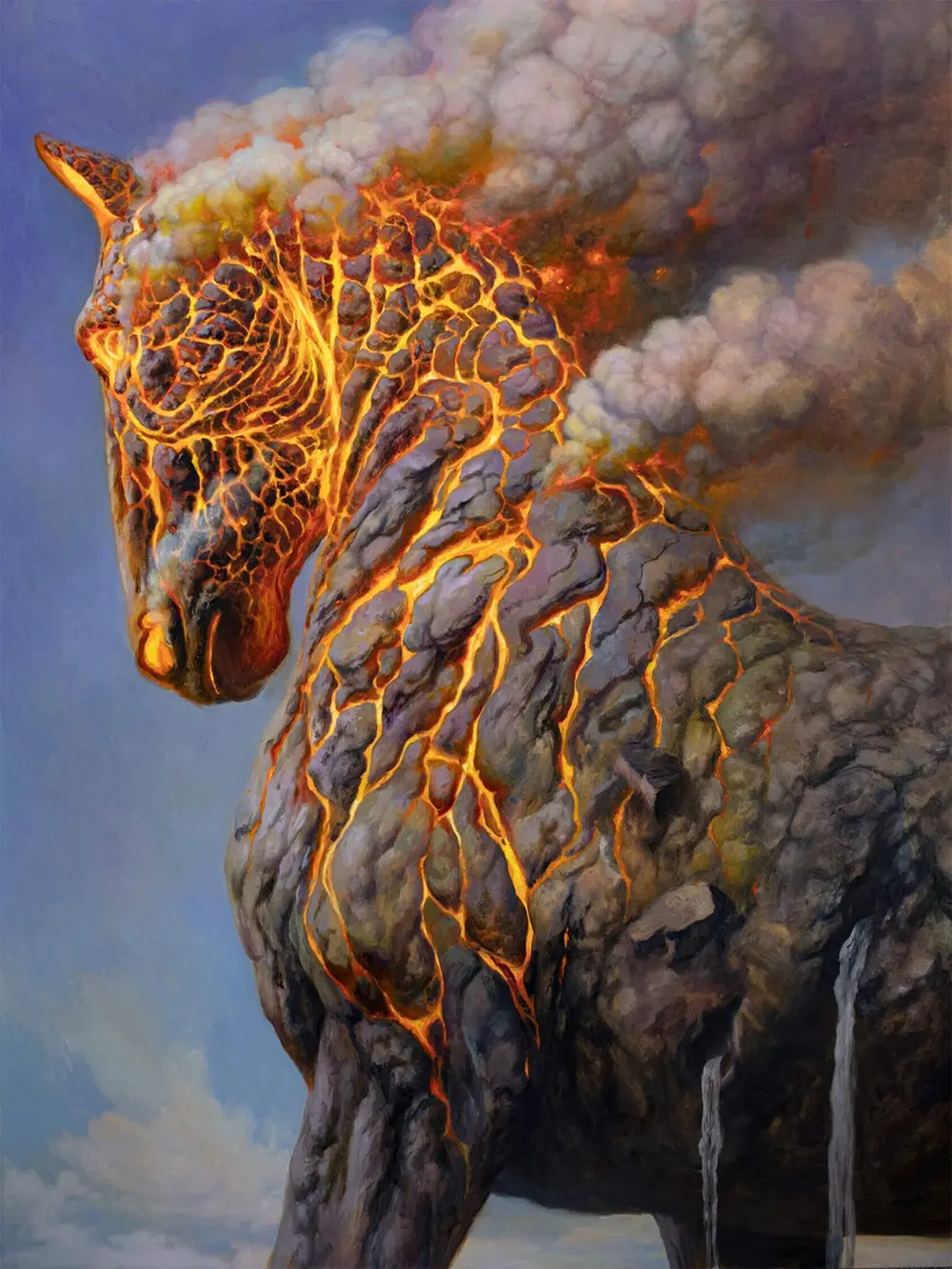
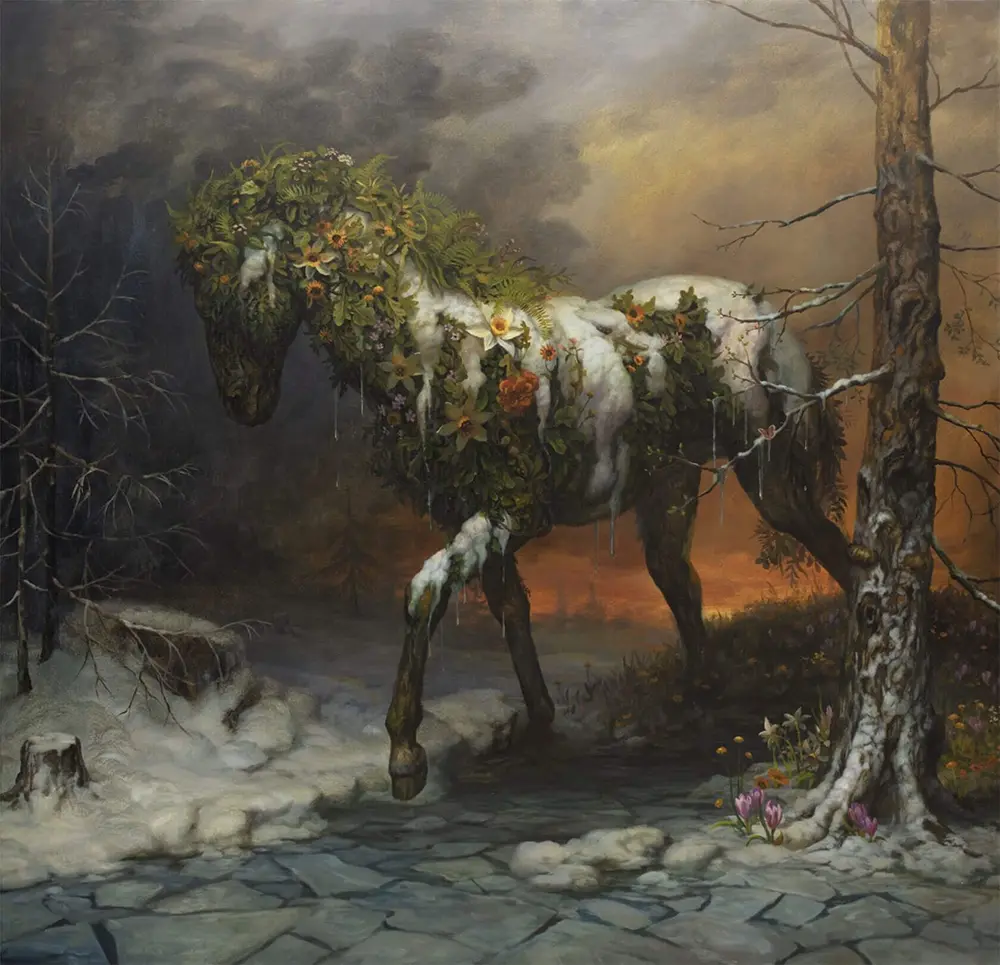
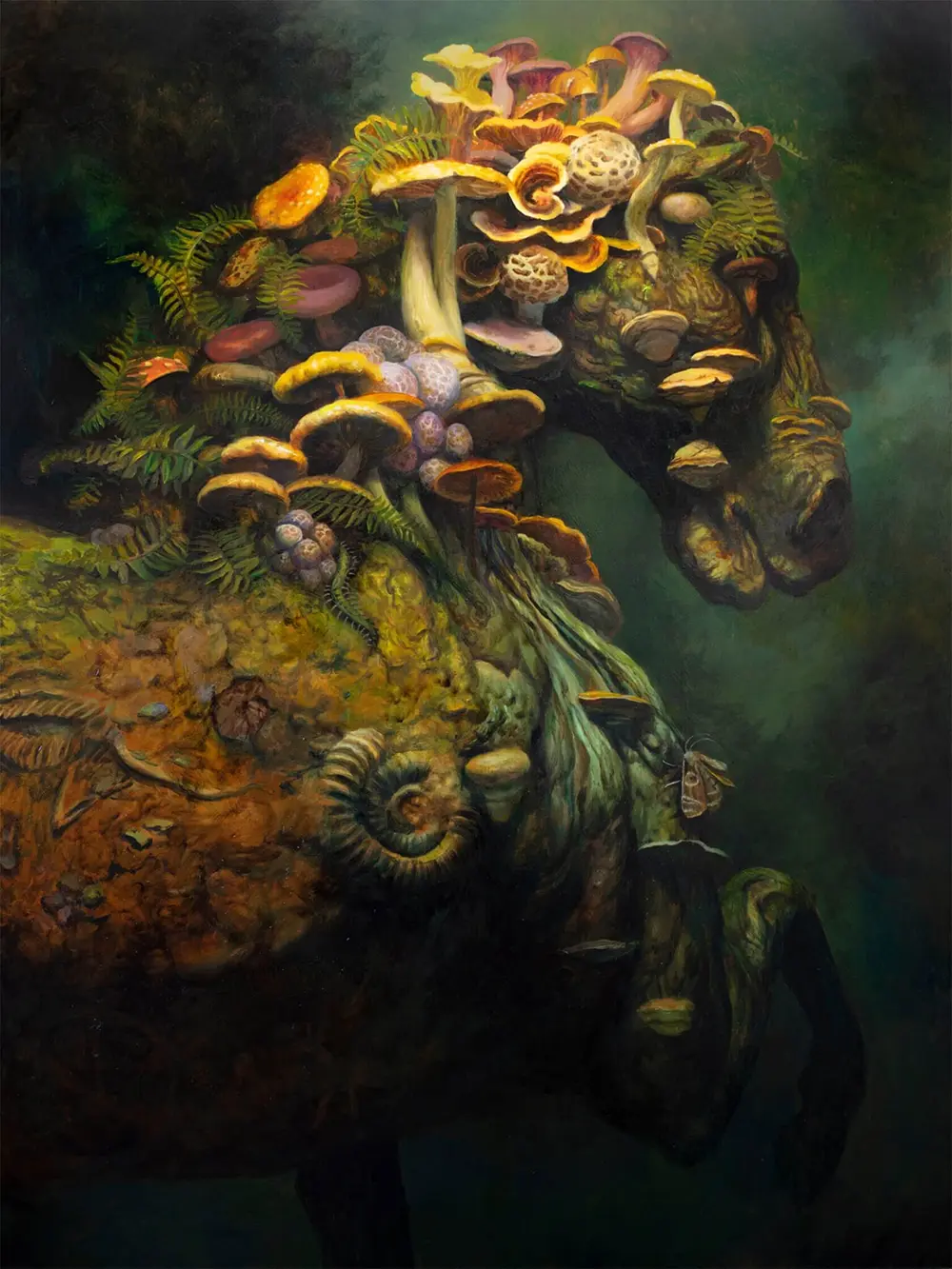
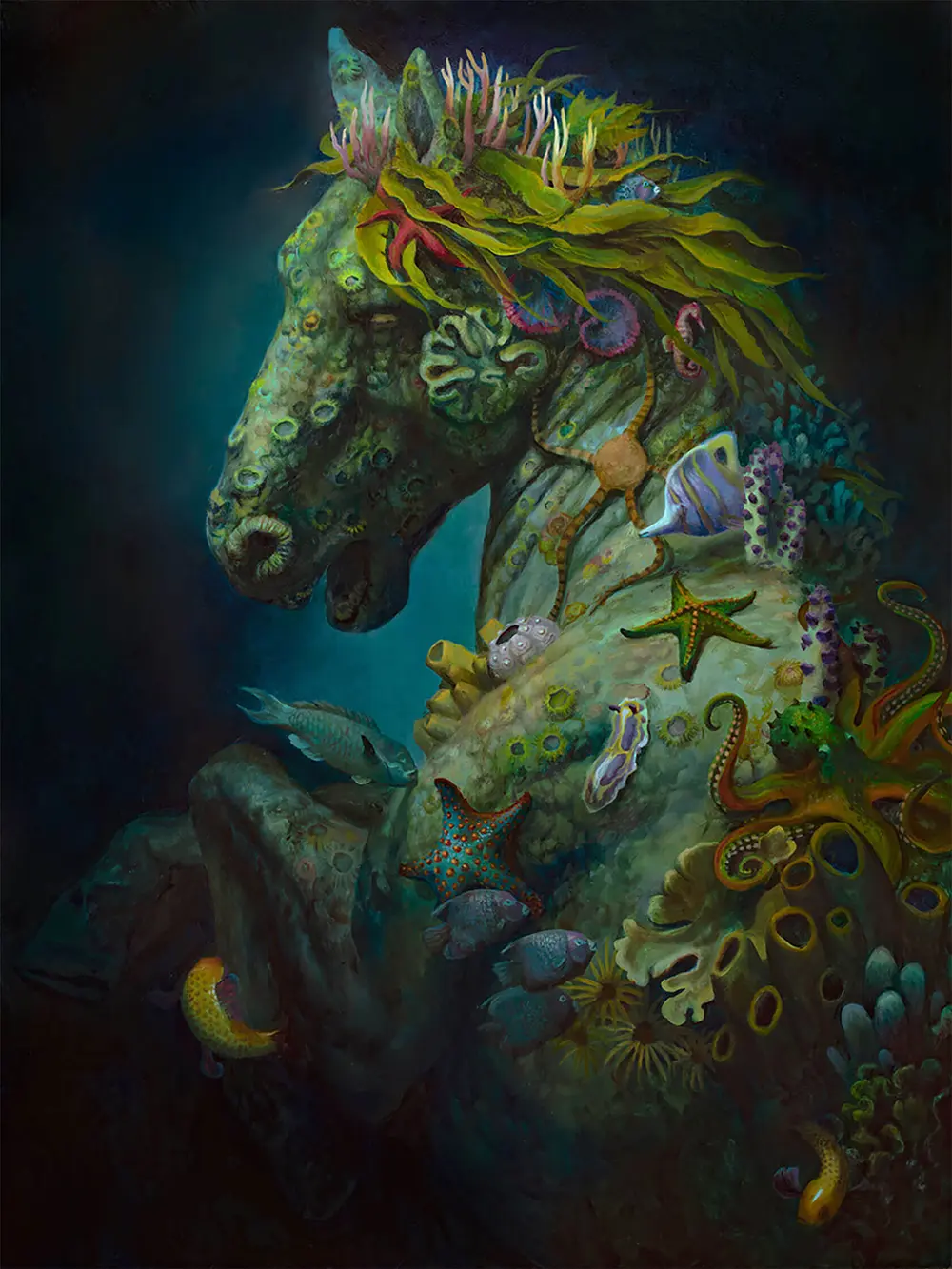
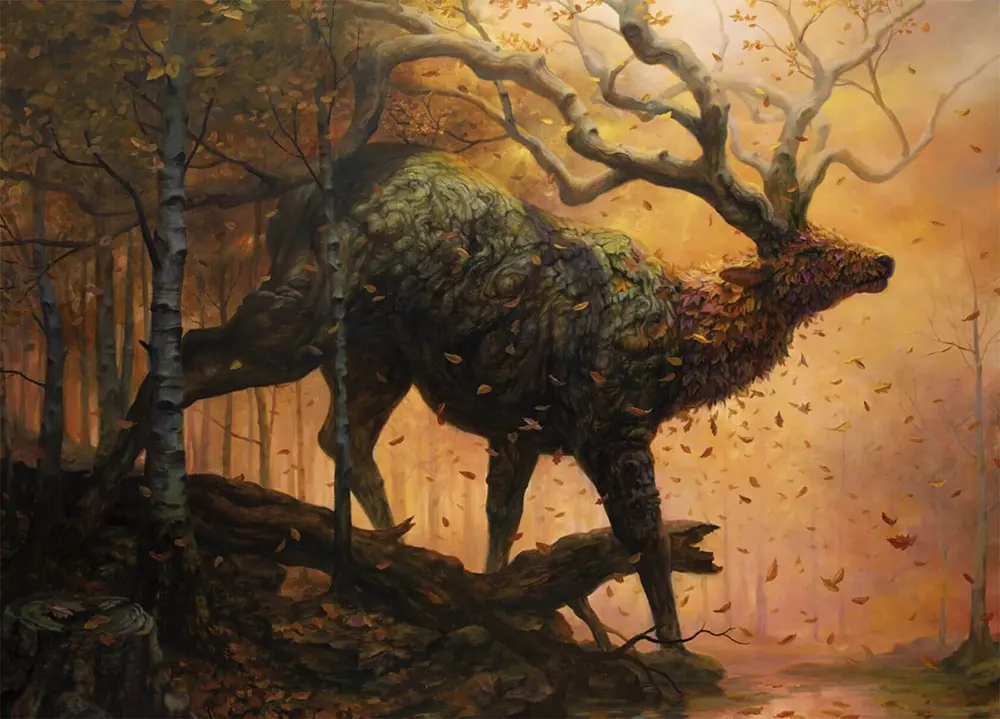
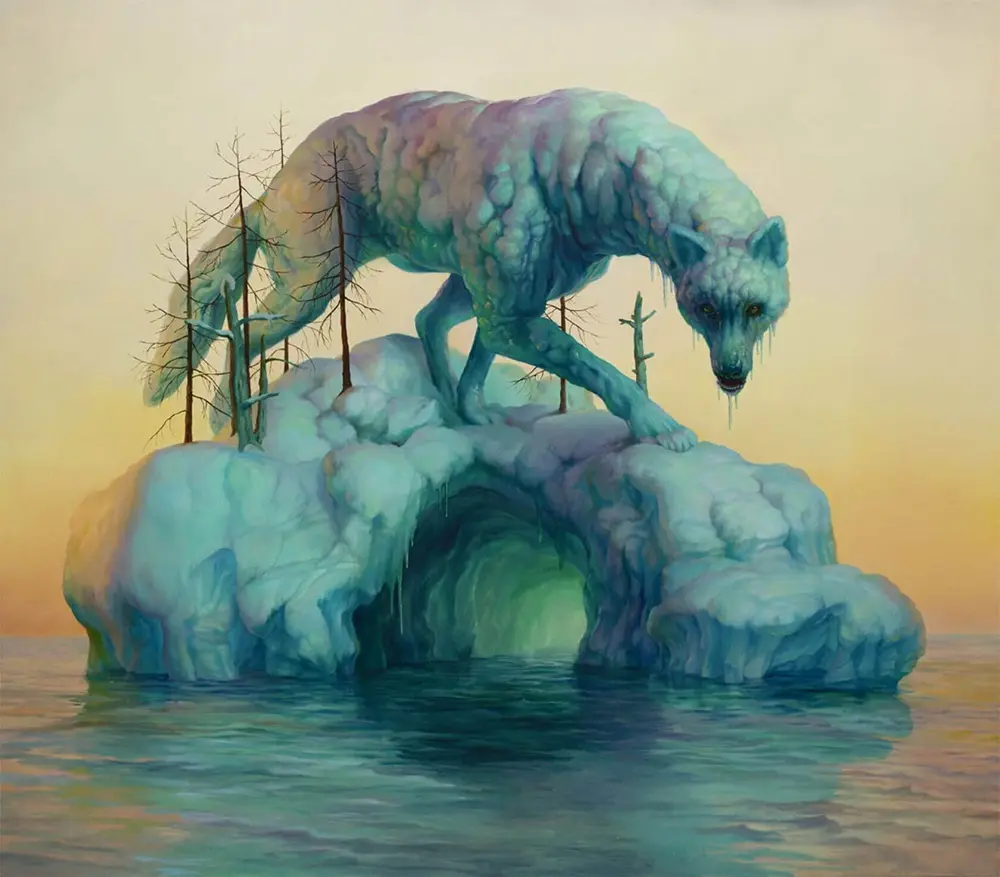
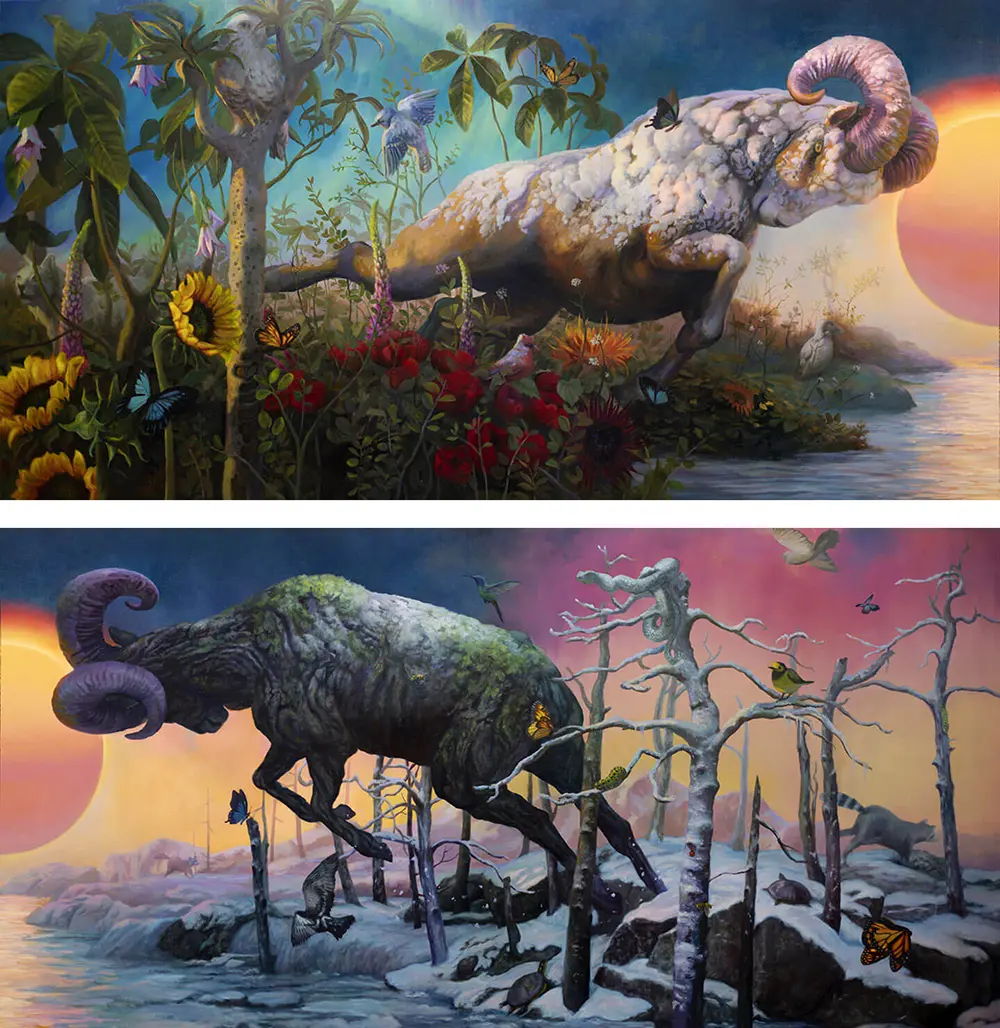
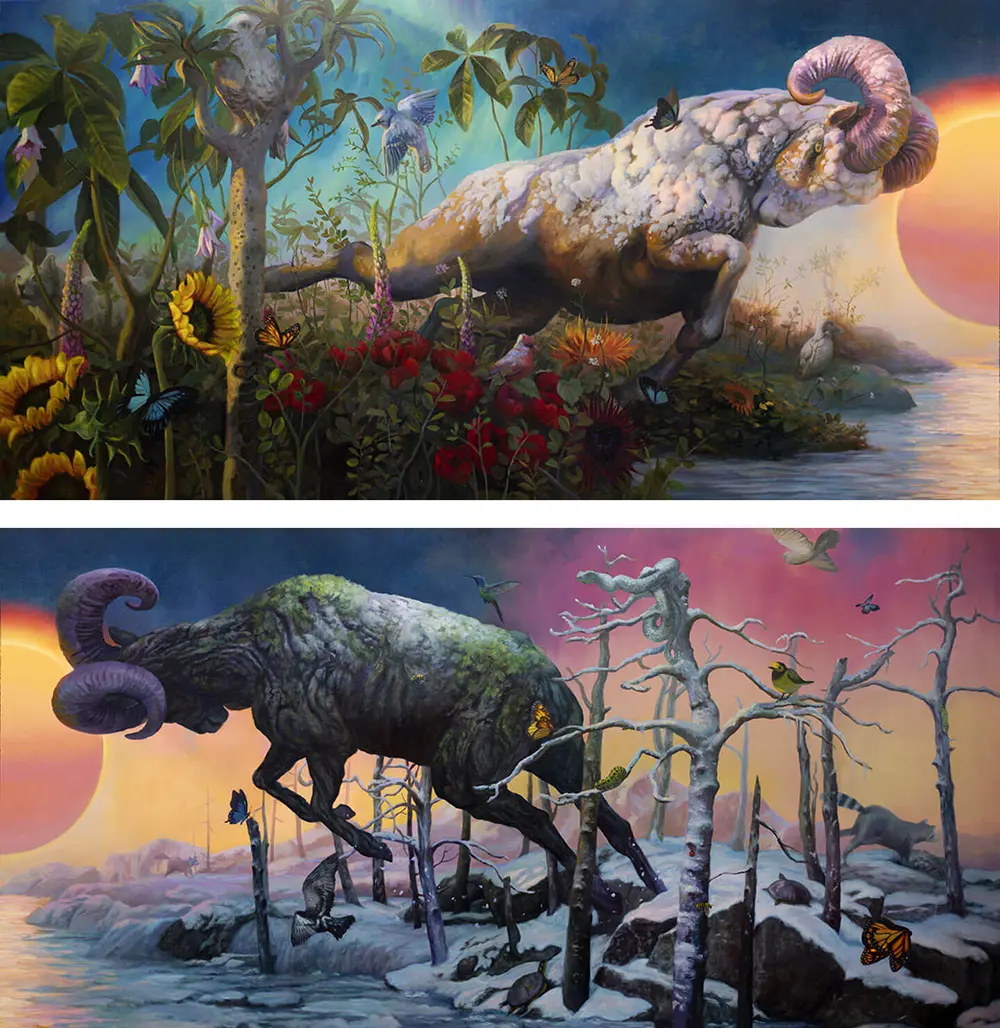
Canadian painter Martin Wittfooth has built a career on creating worlds where nature and symbolism collide. His paintings transform animals into powerful allegories, capturing both beauty and unease. Horses erupt like volcanoes, wolves appear as if carved from glaciers, and jellyfish drift like glowing lanterns among blooms of flowers and fungi. Each scene feels mythic, yet rooted in today’s ecological realities.
Born in Toronto and raised in Finland, Wittfooth later studied in Canada and New York, completing his MFA at the School of Visual Arts in 2008. Since then, his work has been exhibited around the world and featured in publications such as Juxtapoz, Hi-Fructose, and The New York Times. His distinctive vision places him at the crossroads of fine art and environmental storytelling.
At the center of his practice is a reflection on the friction between industrial progress and the natural world. The animals in his paintings are never just animals—they emerge as guardians, omens, and witnesses to humanity’s growing impact on the planet. This blend of allegory and ecology creates pieces that feel at once timeless and urgently contemporary.
Wittfooth’s latest solo exhibition, Deus Ex Terra, brings these themes into sharp focus. Currently on view at Corey Helford Gallery in Los Angeles through October 4, the show presents a striking collection of works that continue his exploration of myth and nature. Visitors can expect to step into a world where the familiar becomes extraordinary, where every brushstroke pushes us to reconsider our relationship with the environment.
With Hybrid Nature, Martin Wittfooth reminds us that art can serve as both a mirror and a warning—offering beauty while asking difficult questions about the future of our planet.