

River tables have become super popular for DIY furniture projects lately. If you’ve ever seen a wooden slab table with a clear or colored “river” running through the middle, it’s probably made with Deep Pour Epoxy. This kind of epoxy resin lets you fill in the thick gaps between wood slabs, and it ends up with a gorgeous glass-like finish.
But if you’re planning to build a river table yourself—or you’re buying materials to make them to sell—there are a few things you should figure out first. Not all epoxy is the same, and picking the right one can totally change how your project turns out.
What Is Deep Pour Epoxy?
Deep Pour Epoxy is a type of casting resin that’s made just for pouring thick layers. Unlike regular epoxy, where you can only pour a few millimeters at a time, deep pour formulas let you pour several centimeters in one go.
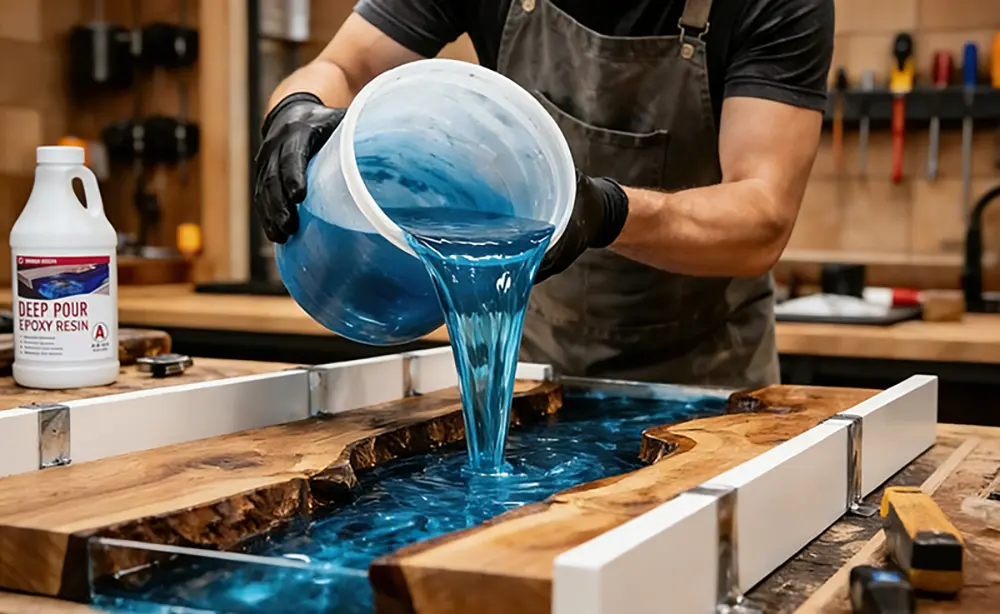
That’s a big deal for river tables. The gap between the two wood slabs can be pretty wide and deep, and you don’t want the resin to overheat—so it needs to cure slowly and evenly.
A good Deep Pour Epoxy usually has these things going for it:
Doesn’t get too hot when it cures
Gives you more time to work with it
Lets bubbles escape easily
Stays really clear after it cures
Since it cures slower, the resin has plenty of time for bubbles to float up to the top, and the surface levels out on its own.
Why Deep Pour Epoxy Is Perfect for River Tables
River tables usually require filling a big gap between two live-edge wood slabs. If you try using regular epoxy, you might run into issues like overheating, cracking, or way too many bubbles.
That’s why Deep Pour Epoxy is a total must-have.
1. Thicker Single Pours
Most deep pour systems let you pour 2–5 cm (or more) in one layer, depending on the formula. That saves you a ton of time compared to doing tons of thin pours.
For big river tables, this is extra important—if you layer too many thin coats, you’ll end up with visible lines between each one.
2. Less Chance of Cracking
When epoxy cures, it gives off heat. If the resin layer is too thick, that heat builds up fast and can make it crack or turn yellow.
A good Deep Pour Epoxy cures way slower, which helps keep that heat under control.
3. Easier Bubble Release
River tables usually mean pouring a ton of resin. Air bubbles trapped inside can totally ruin how the final table looks.
Since Deep Pour Epoxy cures slowly and is thinner, bubbles have more time to rise up to the surface before the resin hardens.
When to Use Table Epoxy Resin Instead
Even though Deep Pour Epoxy is great for filling thick gaps, it’s not always the best pick for the final top surface.
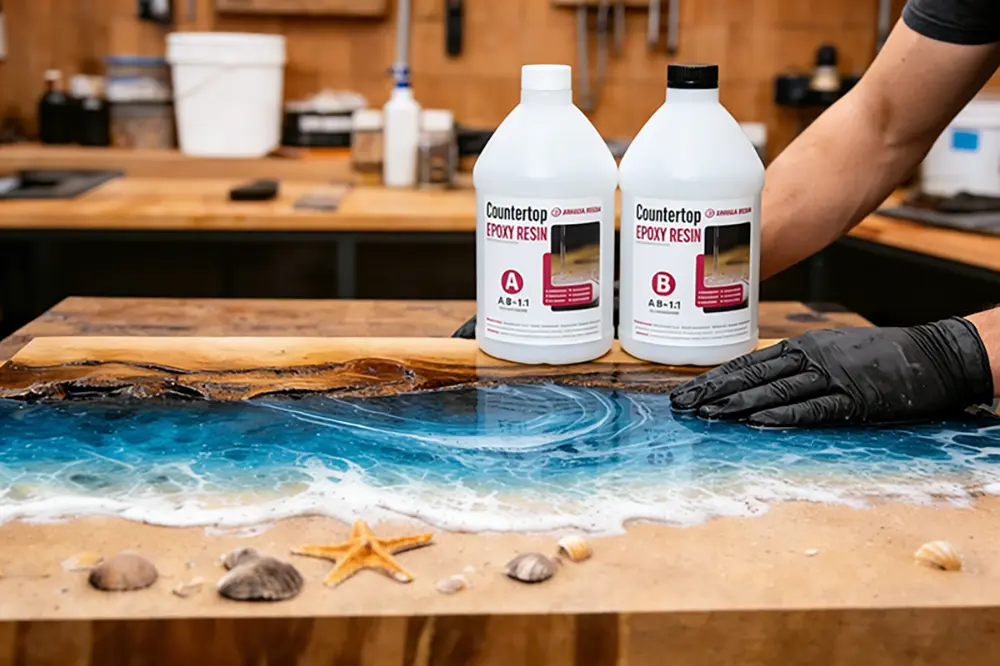
For the top coat of a river table, most builders go with Table Epoxy Resin instead.
Table Epoxy Resin has different perks:
Harder surface
More scratch-resistant
Cures faster
Self-levels for a smooth finish
That’s why most people do it this way:
Fill the river gap with Deep Pour Epoxy
Let it cure completely—no rushing this part!
Sand the surface flat
Put on a thin finishing layer of Table Epoxy Resin
Let it cure completely—no rushing this part!
Sand the surface flat
Put on a thin finishing layer of Table Epoxy Resin
This top coat gives the table a smooth, shiny look and makes it way more durable.
Tips for Pouring Deep Pour Epoxy in River Tables
If you’re new to working with epoxy, here are some practical tips to help you avoid common mistakes—trust me, they’ll save you a lot of hassle.
Keep the Workspace Temperature Steady
Most Deep Pour Epoxy works best when the room is around 20–25°C (68–77°F)—keep that in mind.
If the room’s too cold, the resin gets thick, and it’s way harder to get rid of bubbles.
Seal the Wood First
Natural wood has air and moisture inside it. If you pour epoxy right onto raw wood, bubbles will pop up as that air escapes.
Putting a thin sealing coat of epoxy on first (before the main pour) will help stop that from happening.
Pour Slowly
Pouring too fast traps air and stirs up the resin. Take it slow and steady to keep the resin clear.
Measure Carefully
Epoxy resin needs to be mixed in exact ratios. Even a small mistake can make it not cure all the way, or leave the surface sticky.
Always follow the manufacturer’s recommended ratio when mixing Deep Pour Epoxy—don’t wing it!
Choosing the Right Epoxy Resin
Not all epoxy works for river tables. When you’re picking materials, look for resin that’s made specifically for casting.
A reliable Deep Pour Epoxy should check these boxes:
Super clear finish
Thin consistency (so it flows nicely)
Can handle thick pours
Hardly yellows over time
Hardly yellows over time
For the top coat, a high-quality Table Epoxy Resin will give you that shiny, durable surface most people want from a river table.
Brands like Jincheng Resin sell both deep casting epoxy and table-top finishing resin, which makes it easier for workshops and furniture makers to get all their materials in one place.
Final Thoughts
Building a river table is both a creative project and a little bit technical. Picking the right materials makes all the difference in how it turns out.
Using Deep Pour Epoxy lets you safely fill thick gaps and get that crystal-clear river look. Then adding a finishing layer of Table Epoxy Resin creates a durable, shiny surface that’ll protect the table for years to come.
Whether you’re a hobbyist working on your first river table or a furniture maker creating custom pieces, knowing how these two epoxies work together will make the whole process smoother—and your final table way more impressive.